Vintage Rolls-Royce Collecting: A Guide to Acquiring Automotive Royalty
Vintage Rolls-Royce collecting guide: Silver Ghost to Silver Shadow values, coachbuilder identity, maintenance costs and clubs to start acquiring automotive royalty.…
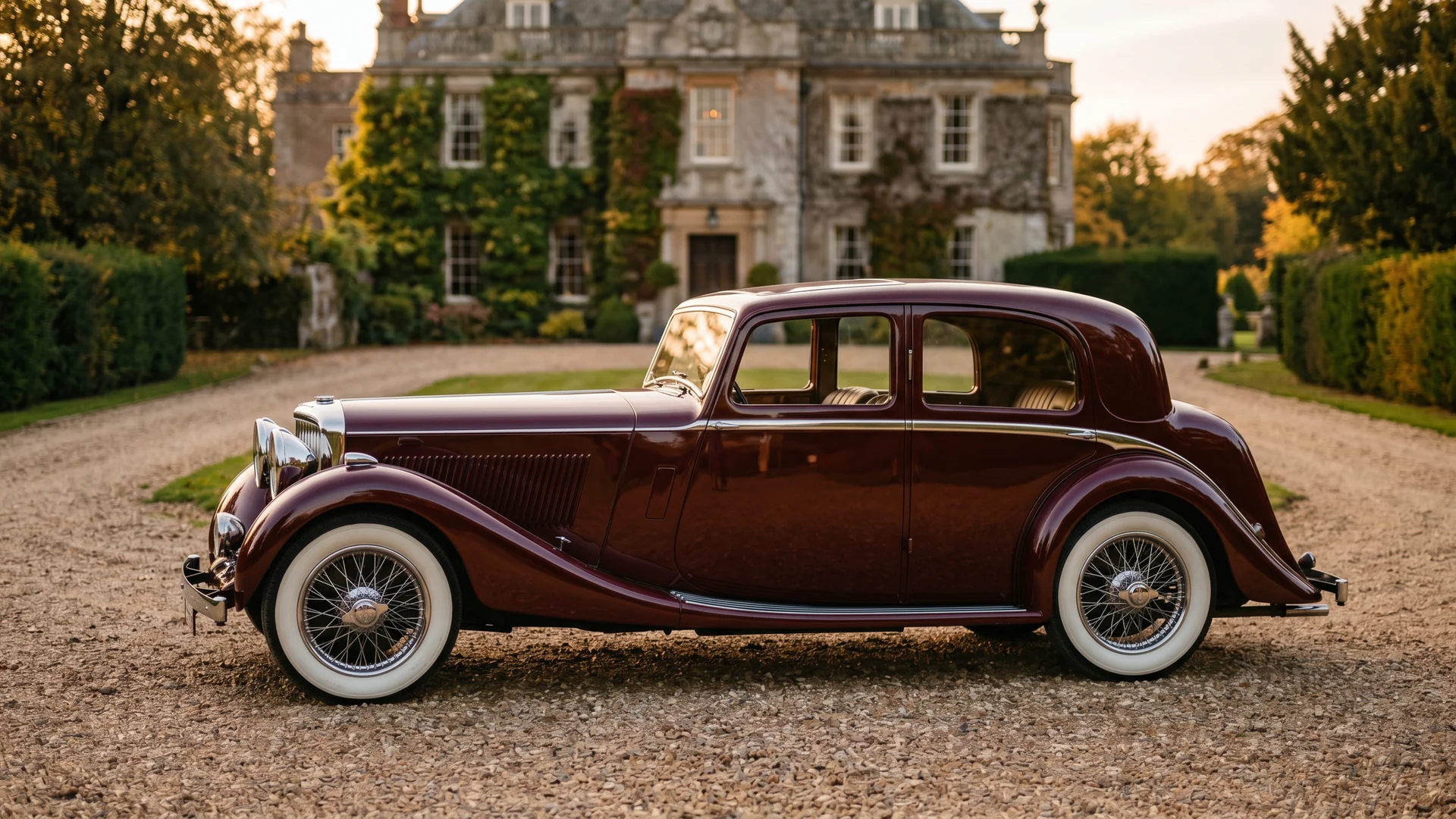
Vintage Rolls-Royce collecting spans the Silver Ghost to the Silver Shadow, with values from $12,000 entry cars to over $1.2 million, where coachbuilder identity and authenticity decide value.
Key Takeaways
- The 1907 Silver Ghost (40/50 HP, 7,874 built 1906-1926) completed a 15,000-mile RAC reliability trial without an involuntary stop, earning the title The Best Car in the World; restored tourers now trade between $450,000 and $900,000.
- The Phantom I (3,512 built 1925-1931) was the only model made at the Springfield, Massachusetts factory, producing 1,240 left-hand-drive Springfield Phantoms valued from $120,000 to $600,000.
- The Phantom II (1929-1935, 1,767 built) is considered the finest-driving pre-war Rolls-Royce, with the short-wheelbase Continental reaching up to $1.2 million or more.
- The Phantom III (1936-1939, 727 built) is the only pre-war V12 Rolls-Royce; its complex 7.3-liter engine depresses values to $120,000-$350,000 but a rebuild can cost $40,000-$70,000.
- The Silver Shadow (30,057 built 1965-1980) is the most accessible Rolls-Royce, with early examples trading at $12,000 to $30,000 thanks to its huge production volume and parts support.
- Every pre-1965 Rolls-Royce was bodied by an independent coachbuilder such as Barker, Hooper, Park Ward or Gurney Nutting, and documented original coachwork commands a substantial premium.
- The Rolls-Royce Enthusiasts' Club Annual Rally at Burghley House in Lincolnshire each June draws over 1,500 cars, the largest gathering of the marque in the world.
🌐 Also available in: Deutsch
Vintage Rolls-Royce Collecting: The Definitive Guide to the Marque of Kings
No automotive marque carries the weight of history, the aura of aristocracy, and the promise of superlative engineering quite like Rolls-Royce. From the Silver Ghost of 1907, the car that earned the enduring title “The Best Car in the World” through a feat of reliability that astonished the Edwardian world, to the post-war Silver Cloud and the coachbuilt Phantoms that defined an entire era of bespoke luxury motoring, Rolls-Royce occupies a unique and exalted position in the collector-car pantheon. The Spirit of Ecstasy, that graceful silver figurine leaning into the wind on every Rolls-Royce radiator since 1911, is perhaps the most universally recognized automotive emblem in the world, a symbol of quality that transcends cultures, languages, and generations. This guide surveys the models that matter most to collectors today, the intricacies of authenticity and coachbuilder identity that determine value, the peculiarities of maintenance that distinguish Rolls-Royce ownership from any other marque, and the vibrant community of enthusiasts who keep these magnificent machines on the road.
The Models That Define the Marque: A Collector’s Survey
To collect Rolls-Royce is to engage with one of the most storied and revered names in the entire history of the automobile, and understanding the hierarchy of models is the essential first step for any prospective collector. The marque’s history can be divided into distinct eras, the Edwardian Silver Ghost period, the coachbuilt Phantom decades between the wars, the post-war transition to standardized bodies, and the modern era, and each era offers a different ownership proposition in terms of cost, usability, and the type of experience the car delivers. The collector who understands these distinctions can choose the Rolls-Royce that matches not only their budget but their temperament: a Silver Ghost demands a level of mechanical sympathy and a willingness to manage its vast scale and weight that some owners find rewarding and others find exhausting, while a Silver Shadow offers effortless modern usability at a price point accessible to almost any enthusiast.
The Silver Ghost, officially designated the 40/50 HP and built between 1906 and 1926 with a total production of 7,874 chassis, is the car that created the legend of Rolls-Royce and established a reputation for engineering excellence that has endured for well over a century. Powered initially by a 7.0-liter six-cylinder engine that was later enlarged to 7.4 liters, the Silver Ghost was renowned for a smoothness and silence that seemed almost supernatural in an era when most automobiles vibrated, clattered, and required constant attention from their chauffeurs. The car’s defining moment came in 1907 when chassis 60551, clothed in a handsome Barker touring body and painted silver with silver-plated fittings, the origin of the Silver Ghost name, completed a 15,000-mile reliability trial conducted under the rigorous observation of the Royal Automobile Club without a single involuntary stop. No other automobile in the world could approach this standard, and the achievement established Rolls-Royce at the very summit of the automotive industry, a position it has never truly relinquished. A well-restored Silver Ghost in touring specification now trades between $450,000 and $900,000 at auction, with the most desirable Barker or Hooper limousine bodies commanding premiums that reflect their quality, rarity, and historical significance. The London-to-Edinburgh-type open tourers, with their distinctive double-V windscreen and purposeful military styling, are particularly prized by collectors who value the Ghost’s dual character as both a stately formal carriage and a capable long-distance tourer. Driving a Silver Ghost today is an experience unlike anything modern motoring can offer: vast and seemingly inexhaustible torque available from little more than idle, a directness and honesty to the steering and brakes that belies the car’s size and weight, and an imperious road presence that parts modern traffic with an authority no contemporary vehicle can match.
The Phantom I, originally named the New Phantom and produced between 1925 and 1931 with 3,512 examples built, replaced the Silver Ghost with a thoroughly modernized overhead-valve 7.7-liter six-cylinder engine that developed 108 horsepower, sufficient, remarkably, to propel even the heaviest formal coachbuilt bodies to speeds approaching 80 miles per hour. The Phantom I holds a unique place in Rolls-Royce history as the only model ever produced at the company’s Springfield, Massachusetts, factory, which operated from 1926 to 1931 and produced 1,240 examples of what are now known as Springfield Phantoms. These American-built cars incorporated subtle but significant adaptations for their market: left-hand drive, three-speed transmissions in place of the British four-speed units, and coachwork from American houses including Brewster, Hibbard and Darrin, and several other mostly forgotten American coachbuilders whose work ranged from restrained elegance to period flamboyance. Springfield Phantoms have emerged as a distinct and increasingly appreciated collecting subset, with values ranging from $120,000 to $350,000 for closed formal cars and $250,000 to $600,000 for open tourers and the especially desirable dual-cowl phaetons. Every Phantom I, whether built in Springfield or Derby, represents the pinnacle of late-1920s automotive luxury, an era when a Rolls-Royce chassis was the foundation upon which the world’s finest coachbuilders created their masterworks.
The Phantom II, produced from 1929 to 1935 with 1,767 examples built, represented a significant mechanical evolution over the Phantom I and is widely regarded by Rolls-Royce connoisseurs as the finest-driving pre-war Rolls-Royce ever produced. The Phantom II introduced a redesigned chassis with semi-elliptic rear springs replacing the cantilever units of earlier models, a centralized lubrication system that simplified the chauffeur’s daily routine, synchromesh on third and fourth gears that made shifting a far more civilized affair than the crash gearboxes of the Phantom I, and a 7.7-liter six-cylinder engine now directly derived from the powerplants that Rolls-Royce had developed for the Schneider Trophy-winning Supermarine seaplanes. The Phantom II Continental, a short-wheelbase variant with a numerically higher axle ratio and stiffer suspension calibrated for sustained high-speed continental touring rather than stately urban progress, is the collector’s choice above all others. Values today range from $300,000 for a sound but unexceptional closed car to $1.2 million or more for an open Continental with documented period touring history and desirable coachwork from the likes of Barker, Gurney Nutting, or Park Ward.
The Phantom III, built from 1936 to 1939 with only 727 examples completed before war halted production, is the only V12 Rolls-Royce of the pre-war era and one of the most technically ambitious automobiles of its time. Its 7.3-liter aluminum V12 engine, designed with aircraft-derived expertise and producing 165 to 180 horsepower, drove through a four-speed synchromesh gearbox with independent front suspension that gave the Phantom III handling characteristics far superior to its beam-axle predecessors. This mechanical sophistication came at a cost, however, and it is a cost that continues to affect the Phantom III’s position in the collector market today. The engine’s complexity, twin distributors, twin ignition coils, twenty-four spark plugs, hydraulic tappets that require precise adjustment, and a general level of intricacy that makes a Phantom II look almost agricultural by comparison, has historically depressed Phantom III values relative to the simpler and more robust Phantom II. Restorers and mechanics who understand the Phantom III’s systems are rare, and the cost of putting one right when it has suffered decades of deferred maintenance can be substantial. Consequently, a well-sorted Phantom III with a desirable body from Hooper, Barker, or Park Ward now trades in the $120,000 to $350,000 range, representing what many knowledgeable collectors consider one of the great bargains in pre-war high luxury. The Phantom III rewards the brave with a driving experience unmatched by any other pre-war Rolls-Royce, combining V12 turbine smoothness with handling that genuinely surprises anyone accustomed to the staid dynamics of earlier Phantoms.
The Silver Cloud series, produced in three generations from 1955 to 1966 with a total of 7,372 examples across all variants, marked Rolls-Royce’s definitive transition into the modern era. The Cloud I, built from 1955 to 1959, utilized the well-proven 4.9-liter six-cylinder engine from the Silver Dawn in a handsome, standardized steel body shell. The Cloud II, introduced in 1959, adopted an all-new 6.2-liter V8 engine that, in its fundamental architecture, remains the basis of Rolls-Royce V8 engines to this day. The Cloud III, launched in 1963, refined the formula with twin headlamps, a lowered radiator shell, and a subtle sharpening of the body lines that produced the most attractive of the three series. Excellent Cloud IIIs now trade in the $45,000 to $90,000 range depending on condition and history, while the rarest variants, the Cloud II and Cloud III drophead coupes with coachwork by Mulliner Park Ward, of which only a few hundred were built, can easily exceed $500,000. The Silver Cloud offers a compelling combination of post-war reliability, pre-war presence, and genuine usability that makes it one of the most popular choices for collectors entering the Rolls-Royce world for the first time.
The Silver Shadow, produced from 1965 to 1980 with a staggering 30,057 examples built, brought Rolls-Royce fully into the modern era with monocoque construction, all-independent self-leveling suspension, four-wheel disc brakes, and the 6.75-liter V8 that would power Rolls-Royce automobiles for decades. The Silver Shadow is the most accessible Rolls-Royce ever built, with early examples now trading at $12,000 to $30,000, astonishing value for a car that cost more than a suburban house when new and still delivers a driving experience of supreme comfort and refinement. The Shadow’s systems are complex by the standards of earlier Rolls-Royces, and the self-leveling suspension and hydropneumatic braking system demand specialist attention, but the enormous production volume means parts, knowledge, and support are readily available through the worldwide network of Rolls-Royce specialists.
Authenticity and Coachbuilder Identity: The Keys to Value
Understanding that every pre-1965 Rolls-Royce was delivered as a rolling chassis to an independent coachbuilder who created a body according to the first owner’s tastes and requirements is fundamental to collecting the marque. The identity of the coachbuilder, whether one of the great British houses like Barker, Hooper, H.J. Mulliner, Park Ward, James Young, Gurney Nutting, Windovers, or Freestone and Webb, or one of the Continental houses like Binder of Paris, Saoutchik, or Erdmann and Rossi of Berlin, profoundly influences a car’s value, its character, and its desirability to the collector market. A Phantom II with a sporting open body by Barker is an entirely different proposition from the same chassis wearing a formal limousine body by Hooper, and the market prices them accordingly. The Rolls-Royce Enthusiasts’ Club in the United Kingdom and the Rolls-Royce Owners’ Club in the United States maintain extensive archives and can assist in researching a car’s original specification. For pre-war cars, the chassis number stamped on the front dumb iron and the sequential build records held by the RREC are the primary tools for establishing authenticity. A Rolls-Royce with documented, original coachwork that has survived intact commands a substantial premium over a car that has been rebodied, however attractive the replacement coachwork may be.
Maintenance Realities: The Cost of Perfection
Rolls-Royces were engineered with a philosophy that the company described, with characteristic understatement, as “adequate strength.” Components were designed to be precisely strong enough for their intended purpose and no stronger, because Rolls-Royce’s legendary precision manufacturing made overbuilding unnecessary in theory. In practice, decades of use, deferred maintenance, and the well-intentioned ministrations of mechanics who did not fully understand the systems they were servicing can accumulate frightening repair bills. A Silver Cloud brake system rebuild, including the unique mechanical servo derived from Hispano-Suiza aircraft practice and driven off the gearbox, costs $8,000 to $15,000 at specialist labor rates. An engine rebuild for a six-cylinder Silver Cloud or Silver Dawn runs $15,000 to $30,000. A V8 rebuild for a Cloud II, Cloud III, or Silver Shadow runs $12,000 to $25,000. The Phantom III’s V12, with its hydraulic tappets and twin ignition systems, can easily consume $40,000 to $70,000 in a specialist’s hands. These are not numbers to frighten the prospective owner but realities to be understood and budgeted for. A Rolls-Royce maintained by a knowledgeable specialist who understands the marque’s idiosyncrasies is a reliable and rewarding companion. A Rolls-Royce maintained by a general mechanic who treats it like a Chevrolet is a rolling liability.
The Community and Events
Rolls-Royce ownership opens the door to a global community of enthusiasts whose dedication to the marque is matched only by their willingness to share knowledge, advice, and camaraderie. The Rolls-Royce Enthusiasts’ Club’s Annual Rally at Burghley House in Lincolnshire, held each June, draws over 1,500 Rolls-Royce and Bentley motorcars, the largest gathering of the marque anywhere in the world, a spectacle of polished paint and gleaming brightwork that must be seen to be believed. The Rolls-Royce Owners’ Club in the United States hosts national meets and regional tours throughout the year. The Goodwood Revival welcomes pre-1966 Rolls-Royces as part of the event’s meticulous period atmosphere. Pebble Beach, Amelia Island, and the Concorso d’Eleganza Villa d’Este routinely feature significant Rolls-Royces in their judged classes. Collecting vintage Rolls-Royces is not merely an automotive pursuit. It is an engagement with craftsmanship, with history, and with a standard of engineering and quality that has defined the absolute pinnacle of motoring for well over a century. Whether your taste runs to the majestic proportions of a Silver Ghost, the sporting verve of a Phantom II Continental, or the dignified presence of a Silver Cloud, the Spirit of Ecstasy awaits to guide you home. For the collector willing to invest the time to understand these magnificent machines, to learn their idiosyncrasies and respect their engineering, the rewards are extraordinary: the silent, effortless surge of a Phantom III V12 pulling toward the horizon, the commanding view over an impossibly long Silver Ghost bonnet, the hushed refinement of a Silver Shadow gliding through the countryside. These experiences cannot be replicated by any modern automobile, however technologically advanced, because they are the product of an era when the automobile was not an appliance but a statement of ambition, of taste, and of a standard of excellence that admitted no compromise. To own a vintage Rolls-Royce is to become part of a story that began in 1904 when Charles Rolls met Henry Royce and agreed to sell the cars that Royce would build, a partnership that produced, in the judgment of generations of owners and observers, the finest motor cars in the world.
Getting Started in Rolls-Royce Collecting
For the newcomer to Rolls-Royce collecting, the range of choice can be overwhelming, but a clear path exists. Begin with the purpose of your purchase: a Silver Shadow or Silver Spirit provides modern usability, widespread parts availability, and entry prices that make the marque accessible to almost any enthusiast. A Silver Cloud offers classic presence with genuine usability and a support network that spans the globe. For those drawn to the coachbuilt era, a Phantom II or a well-sorted Phantom III rewards the committed owner with an experience that no modern car can approach. Join the Rolls-Royce Owners’ Club or the Rolls-Royce Enthusiasts’ Club before you buy, the knowledge, advice, and camaraderie of the membership will save you from expensive mistakes and enrich your ownership experience immeasurably. Attend a club event or a concours where Rolls-Royces are displayed and judged, and talk to owners about their cars. The Rolls-Royce community is famously welcoming to newcomers, and the best way to learn about the marque is from those who have lived with it. The journey into Rolls-Royce collecting is one of the most rewarding paths in the entire classic-car world, and it begins with a single step: the decision to seek out and acquire a car built to a standard that its creators described, with characteristic understatement, as simply adequate. They meant adequate to any demand the owner might place upon it, and a century later, that standard still defines the marque.
Frequently Asked Questions (FAQ)
Which vintage Rolls-Royce is best for a first-time collector?
A Silver Shadow or Silver Spirit is the most accessible entry, with Shadows from $12,000 to $30,000, offering modern usability and wide parts availability. A Silver Cloud adds classic presence with genuine usability and a global support network, making both ideal starting points for newcomers to the marque.
Why is the Silver Ghost called The Best Car in the World?
The Silver Ghost earned the title in 1907 when chassis 60551, in a silver Barker touring body, completed a 15,000-mile reliability trial under Royal Automobile Club observation without a single involuntary stop. No other automobile could match this, placing Rolls-Royce at the summit of the industry, a position it has never truly relinquished.
How much does a vintage Rolls-Royce Silver Ghost cost?
A well-restored Silver Ghost in touring specification now trades between $450,000 and $900,000 at auction. The most desirable Barker or Hooper limousine bodies command premiums, and the London-to-Edinburgh-type open tourers, with their double-V windscreen, are especially prized for the Ghost's dual stately and touring character.
What makes the Rolls-Royce Phantom III collectible despite its lower value?
The Phantom III is the only pre-war V12 Rolls-Royce, with a 7.3-liter aluminum engine producing 165 to 180 horsepower and independent front suspension. Its complexity depresses values to $120,000-$350,000, which many collectors consider a great bargain, since it rewards brave owners with V12 smoothness and handling that surprises drivers of earlier Phantoms.
Why does the coachbuilder matter when buying a vintage Rolls-Royce?
Every pre-1965 Rolls-Royce was delivered as a rolling chassis to an independent coachbuilder who bodied it to the owner's taste. The coachbuilder's identity, whether Barker, Hooper, Park Ward or a Continental house like Saoutchik, profoundly influences value and character. Documented, original coachwork that survives intact commands a substantial premium over a rebodied car.
How much does it cost to maintain a vintage Rolls-Royce?
Maintenance varies by model: a Silver Cloud brake rebuild costs $8,000-$15,000, a six-cylinder engine rebuild $15,000-$30,000, and a V8 rebuild $12,000-$25,000. The Phantom III's V12 can consume $40,000-$70,000. A car serviced by a marque specialist is rewarding; one treated like a Chevrolet becomes a rolling liability.
Where can you see vintage Rolls-Royces at events?
The Rolls-Royce Enthusiasts' Club Annual Rally at Burghley House in Lincolnshire each June draws over 1,500 cars, the largest gathering anywhere. The Goodwood Revival welcomes pre-1966 examples, while Pebble Beach, Amelia Island and the Concorso d'Eleganza Villa d'Este regularly feature significant Rolls-Royces in their judged classes.
What is the Phantom II Continental and why is it desirable?
The Phantom II Continental is a short-wheelbase variant with a numerically higher axle ratio and stiffer suspension calibrated for sustained high-speed continental touring rather than stately urban progress. It is the collector's top choice, with open examples carrying documented period history and coachwork by Barker, Gurney Nutting or Park Ward reaching $1.2 million or more.
What is the most accessible vintage Rolls-Royce to collect?
Why is the Silver Ghost so historically significant?
How important is the coachbuilder to a Rolls-Royce's value?
More from Blog
The Future of Classic Car Collecting: Trends Shaping the Next Generation
The future of classic car collecting: why 2035 ICE bans spare existing cars, plus e-fuels, shifting demographics, electromods and fractional ownership…
Classic Car Insurance Guide: Protecting Your Vintage Investment
Classic car insurance guide: why agreed-value policies beat stated and actual cash value, how Hagerty, Grundy and Chubb compare, plus costs and covera…
Classic Car History Timeline: From Benz to the Modern Collector Era
Classic car history timeline from the 1886 Benz Patent-Motorwagen through coachbuilding, muscle cars and supercars to modern collectibles. Discover th…