Classic Car Events Calendar: The Ultimate Guide to Global Automotive Gatherings
Your complete classic car events calendar: Pebble Beach, Goodwood Revival, Mille Miglia, Villa d’Este and more global concours, races and rallies to plan now.…
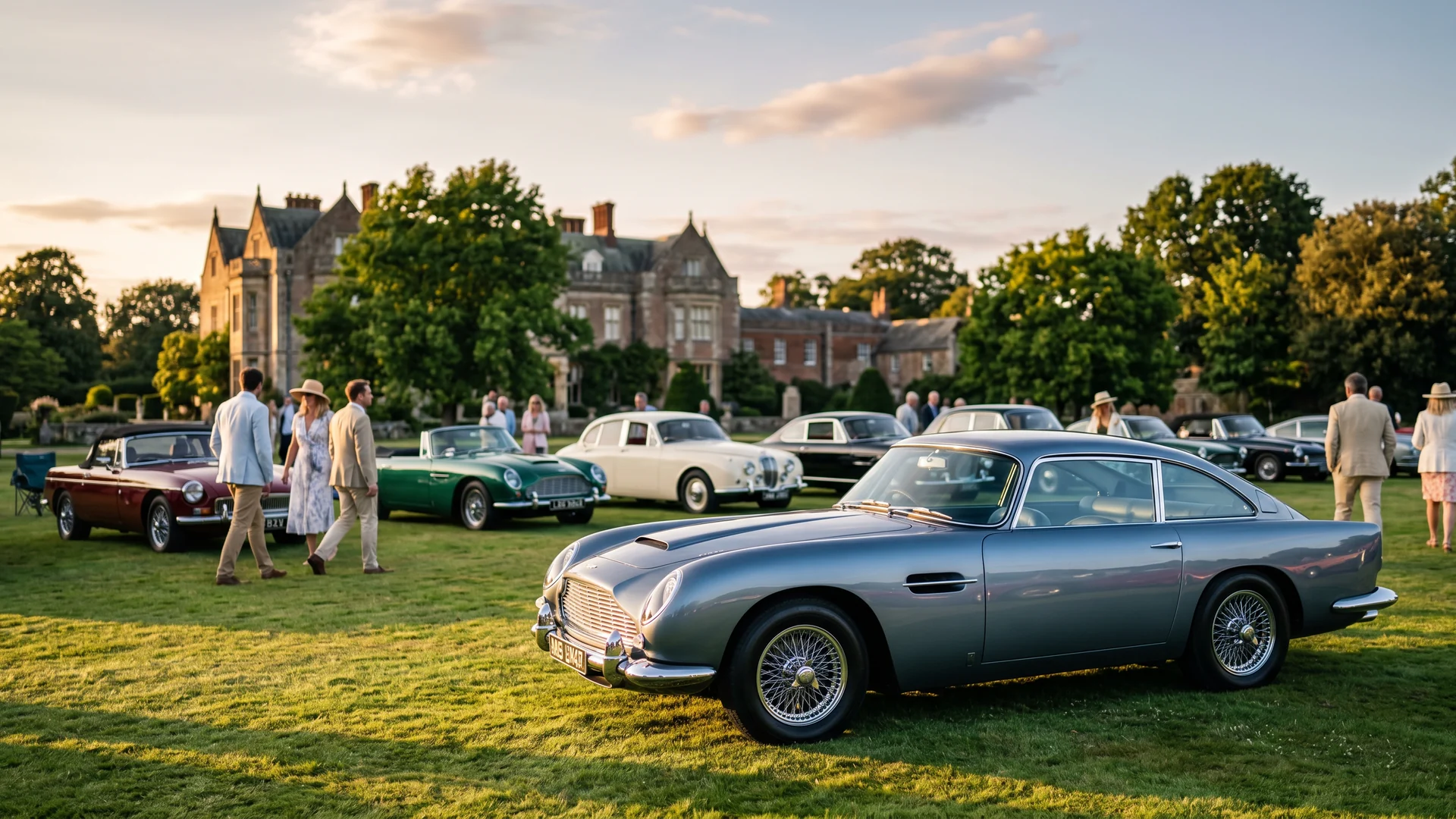
The classic car events calendar peaks with the Pebble Beach Concours d'Elegance and Goodwood Revival, anchoring a year of world-class concours, historic races, and driving rallies across North America and Europe.
Key Takeaways
- The Pebble Beach Concours d'Elegance, held each August since 1950 on the Monterey Peninsula, invites about 200 cars across 25 to 30 classes; its 2024 Best of Show went to a 1937 Mercedes-Benz 540K Special Roadster.
- Monterey Car Week comprises over 30 events, including the Rolex Monterey Motorsports Reunion at Laguna Seca, The Quail, and auctions by RM Sotheby's, Gooding and Company, Bonhams, and Broad Arrow.
- The Goodwood Revival, held each September in West Sussex, recreates motor racing from 1948 to 1966 with mandatory period dress and the Kinrara Trophy, the most valuable grid in historic motorsport.
- The Mille Miglia, revived in 1977 as a regularity rally, runs the thousand-mile Brescia-to-Rome-and-back route each May, open only to models that ran the original 1927 to 1957 race.
- The Concorso d'Eleganza Villa d'Este on Lake Como each May limits its field to about 50 concours cars, awarding the Trofeo BMW Group and the public-voted Coppa d'Oro.
- Techno-Classica Essen each April is the world's largest indoor classic-car show, filling 20 halls with over 1,200 exhibitors and drawing more than 180,000 visitors.
- Driving tours like the Colorado Grand, a thousand-mile pre-1960 tour founded in 1989, have raised over $8 million for Colorado charities.
🌐 Also available in: Deutsch
The Classic Car Events Calendar: The World’s Greatest Shows, Rallies, Races, and Concours
The classic car world lives and breathes through its events. From the meticulously manicured lawns of the Pebble Beach Concours d’Elegance, where the world’s most significant automobiles are judged against standards of perfection that exceed what their creators achieved, to the dusty, oil-scented paddocks of the Goodwood Revival, where priceless racing cars are driven at full commitment by determined drivers wearing period-correct goggles and string-back gloves, these gatherings define the rhythm of the collector-car year and create the experiences that enthusiasts remember for a lifetime. From the frozen winter elegance of The ICE Concours in St. Moritz to the sun-scorched tarmac of Mille Miglia checkpoints in the Italian countryside, the events calendar offers a lifetime of destinations for those who love classic automobiles. This definitive guide catalogs the events that every serious enthusiast should know about, and many they should aspire to attend at least once in a lifetime. The events described below are not merely gatherings of cars. They are communities, traditions, and shared experiences that bind together a global network of enthusiasts whose passion for historic automobiles transcends borders, languages, and generations. Planning your attendance at these events requires forethought, budgeting, and often a willingness to commit months or even a year in advance, but the rewards, the memories, the friendships, and the sheer sensory overload of seeing great cars in motion and at rest, repay the investment many times over.
North American Flagship Events: The Season’s Pinnacles
The Pebble Beach Concours d’Elegance, held annually since 1950 on the eighteenth fairway of the Pebble Beach Golf Links overlooking the endlessly photogenic Carmel Bay on California’s Monterey Peninsula, is the undisputed pinnacle of the concours world and the single event to which every other concours is compared, usually unfavorably. Each August, approximately 200 automobiles are invited to compete across 25 to 30 classes that are curated each year to celebrate specific marque anniversaries, design themes, or historical milestones. The cars arrive from collections on every continent, transported in enclosed carriers and prepared by teams of specialists who spend days, in some cases weeks, detailing every surface, adjusting every panel gap, and ensuring that every component presents as it never quite did even when the car was new. Winning Best of Show at Pebble Beach is the highest honor achievable in the world of automotive preservation and restoration, a career-defining achievement for the restorer and a permanent enhancement to the car’s provenance and value. In 2024, a 1937 Mercedes-Benz 540K Special Roadster took the top honor. Previous Best of Show winners include a 1938 Alfa Romeo 8C 2900B Touring Berlinetta, a 1929 Duesenberg Model J/SJ Convertible, and a 1954 Ferrari 375 MM Scaglietti Coupe, each one a singular masterpiece of automotive art. The week surrounding the Concours, known universally as Monterey Car Week, comprises over 30 separate events that collectively form the densest concentration of automotive activity on the planet: the Rolex Monterey Motorsports Reunion at WeatherTech Raceway Laguna Seca, where historic race cars are exercised at speed rather than displayed statically; The Quail, A Motorsports Gathering, limited to just 5,000 attendees at over $1,000 per ticket, pairing exceptional automobiles with gourmet food and fine wine on the manicured lawns of the Quail Lodge; the Concorso Italiano, celebrating the full breadth of Italian automotive design; auctions by RM Sotheby’s, Gooding and Company, Bonhams, and Broad Arrow that collectively generate hundreds of millions of dollars in transaction volume over a single weekend; and countless manufacturer debuts, private parties, and impromptu gatherings that make every corner of the Monterey Peninsula feel like the center of the automotive universe for one glorious week each summer.
The Amelia Island Concours d’Elegance, held each March on the oceanfront golf course of the Ritz-Carlton Amelia Island in northern Florida, has grown since its founding in 1996 by the automotive writer and photographer Bill Warner into the East Coast’s premier concours and a worthy companion to Pebble Beach in the calendar. Amelia regularly attracts over 300 cars and 25,000 spectators to its show field, with the Atlantic Ocean providing a backdrop that rivals anything California can offer. The show’s annual honor classes, each year celebrating specific marques, anniversaries, and influential personalities from the automotive world, bring significant cars from collections around the world to the Florida coast. The 2024 event honored the 70th anniversary of the Mercedes-Benz 300SL and featured a special curated gathering of Cunningham race cars, the American-built sports-racers that challenged the European establishment at Le Mans in the 1950s. Gooding and Company and Broad Arrow hold accompanying auctions that serve as the opening salvos of the American auction season.
The Quail, A Motorsports Gathering, held on the Friday of Monterey Car Week at the Quail Lodge in Carmel Valley, offers a more intimate and curated alternative to the sprawling scale of the Pebble Beach Concours. Attendance is capped at 5,000, and the garden-party atmosphere, with gourmet food stations, wine tastings, and carefully curated displays of exceptional automobiles arranged on the lawns, creates an experience that many seasoned attendees prefer to the larger events. Tickets sell out within hours of their release each year, and the secondary market prices can exceed $2,000 for a single admission.
The Cavallino Classic, held each January in Palm Beach, Florida, is the premier Ferrari concours in North America and a mandatory pilgrimage for serious Ferrari collectors. Founded in 1991, the event attracts the finest Ferraris on the continent, from vintage 166MM Barchettas of the late 1940s through the full lineage of V12 berlinettas to the modern hypercars that define the marque’s current pinnacle, and the judging standards are exacting to a degree that intimidates all but the most meticulously prepared cars. The event includes track days at Palm Beach International Raceway and a gala dinner that is a highlight of the social calendar for the Ferrari-collecting community.
Radwood, held on multiple dates and in multiple cities throughout the year, has become a cultural phenomenon entirely its own. Celebrating the cars, and the fashion, music, and aesthetic, of the 1980s, 1990s, and 2000s, Radwood events encourage period-correct dress, and the parking lot is every bit as entertaining as the judged show field. Mitsubishi 3000GT VR-4s, BMW E30 M3s, Ford RS200s, Porsche 944 Turbos and 928s, and Lamborghini Countaches mingle with Acura NSXs and Toyota Supras in a vibrant, unpretentious celebration of an era when posters of supercars adorned bedroom walls and car culture felt accessible, exciting, and wonderfully unselfconscious. Radwood has introduced a new generation to the car-show format and demonstrated conclusively that the definition of “classic” is continuously evolving.
European Events: The Old World at Its Most Magnificent
There is simply nothing else like the Goodwood Revival. Held each September on the grounds of Goodwood House in West Sussex, England, the event is a creation of the Duke of Richmond, a passionate motorsport enthusiast who has transformed his family’s estate, built around a former RAF airfield that served as a Spitfire base during the Battle of Britain, into the world’s most immersive celebration of mid-century motor racing. The Revival recreates the golden era of the sport, from 1948 to 1966, with a fidelity to period detail that extends to every aspect of the experience. Period dress is mandatory for all attendees entering the paddock and infield areas; modern clothing is restricted to the car parks and outer perimeter. The circuit itself is essentially unchanged from its wartime airfield configuration, with straw bales marking the apexes and no modern safety barriers to dilute the visual authenticity. And the racing is genuinely, thrillingly competitive: D-Type Jaguars, Ferrari 250 SWBs, AC Cobras, Lotus Cortinas, and pre-war Bentleys are driven with full commitment by professional drivers and accomplished amateurs who understand that these are not parade laps but actual races, with positions contested and lap times that would have been respectable in period. The Kinrara Trophy, for closed-cockpit GT cars of the early 1960s, Ferrari 250 GTOs, Jaguar E-Type Lightweights, Aston Martin DB4 GTs, and the like, is the most valuable grid in historic motorsport and worth the price of admission alone. The Revival’s immersive period atmosphere extends beyond the track to a vintage high street with functioning shops, period aircraft displays overhead, and a dedication to authenticity that has made it the most coveted ticket in the classic-car world.
The Mille Miglia, revived in 1977 as a regularity rally rather than the all-out road race it was during its original incarnation from 1927 to 1957, traces the classic thousand-mile route from Brescia to Rome and back over four days each May. Only cars of a model that actually participated in the original Mille Miglia are eligible for entry, and the application process is fiercely competitive. The entry list typically features Mercedes-Benz 300SLRs, Ferrari 340 and 375 MMs, Alfa Romeo 6C 1750s, pre-war BMW 328s, and an array of smaller Italian sports cars whose names evoke the romance of a lost era of Italian motorsport. The route passes through medieval towns where entire populations line the streets, waving and cheering as the cars pass, and the experience of driving an open vintage car through the Italian countryside with the sound of the engine echoing off ancient stone walls is, by universal agreement of those who have done it, one of the peak experiences available to the classic-car enthusiast.
The Concorso d’Eleganza Villa d’Este, held on the terraced grounds of the Grand Hotel Villa d’Este overlooking the shimmering waters of Lake Como each May, is the European counterpart to Pebble Beach in prestige and arguably surpasses it in atmosphere. First held in 1929, with a hiatus during the Second World War and a revival in the 1980s that restored its place at the summit of the concours world, the Villa d’Este event limits its field to approximately 50 concours cars and a similar number of concept cars and prototypes, creating an atmosphere of refined exclusivity that is impossible to replicate at larger events. The Trofeo BMW Group is awarded to Best of Show by a jury of international experts, while the Coppa d’Oro is determined by public referendum among attendees, a democratic element unusual in the concours world.
Techno-Classica Essen, held each April at the sprawling Messe Essen exhibition complex in Germany’s industrial heartland, is the world’s largest indoor classic-car show, occupying 20 halls with over 1,200 exhibitors and drawing more than 180,000 visitors over the course of its run. It serves as the European hub for club displays, marque anniversaries, restoration suppliers, and an enormous parts market where obscure components can be sourced. Major manufacturers use Techno-Classica as the platform for their heritage departments, Mercedes-Benz Classic, BMW Group Classic, Porsche Museum, and Audi Tradition, to showcase their histories alongside multi-million-euro dealer displays.
The Le Mans Classic, held every two years on the full 13.6-kilometer Circuit de la Sarthe that hosts the modern 24 Hours of Le Mans, recreates the great endurance race with period-correct cars racing across six grids representing the distinct eras from 1923 to 1981. The event includes club parking for over 8,500 classic cars, a vintage village, and the unique, unforgettable spectacle of night racing on the Mulsanne Straight, with headlights cutting through the darkness and exhaust flames trailing behind the cars as they brake for Mulsanne Corner, a sight that connects modern spectators directly to the experience of the original endurance classic. The Tour Auto, held each April in France, is the modern revival of the Tour de France Automobile, covering over 2,000 kilometers of French backroads with closed-road special stages, circuit sessions at historic venues like Dijon-Prenois, and overnight stops in cities that include Paris, Vichy, and Biarritz. Entry is restricted to cars of a type that competed in the original event between 1951 and 1973.
Rallies and Driving Tours: The Ultimate Road Experience
The Colorado Grand, held each September, is a thousand-mile, four-day tour limited to pre-1960 sports and racing cars that has raised over $8 million for Colorado charities since its founding in 1989. The route winds through the Rocky Mountains at altitudes exceeding 12,000 feet, taking in some of the most spectacular roads on the continent. Participation is by invitation only, and the field typically includes Ferrari 250 Testa Rossas, Maserati 300S sports-racers, and pre-war Alfa Romeos being driven as their creators intended. The Copperstate 1000, held each April in Arizona, follows a similar format through the Sonoran Desert and mountains of the American Southwest. The Going to the Sun Rally, a more recent addition to the calendar that traverses Montana and the Canadian Rockies, has quickly earned a reputation for spectacular scenery, including Glacier National Park’s famous Going-to-the-Sun Road, and a welcoming atmosphere that appeals to drivers who prefer seat time to show-field display.
Planning Your Attendance: Practical Realities
For the North American enthusiast, the essential annual trifecta is Amelia Island in March, Monterey Car Week in August, and a fall concours, Hilton Head or the Audrain Newport Concours in October. For those with European inclinations, the spring-through-autumn sequence of Techno-Classica in April, Mille Miglia in May, Villa d’Este also in May, Le Mans Classic in July on its biennial schedule, and Goodwood Revival in September covers the canonical events that every serious enthusiast should experience at least once. Tickets for the most exclusive events, The Quail, the Goodwood Revival, Villa d’Este, sell out months in advance and often within hours of release. Book accommodations even earlier: Monterey Peninsula hotel rooms that regularly cost $300 per night command $800 or more during Car Week, with minimum-stay requirements of three to five nights and nonrefundable deposits. Plan well ahead, budget realistically for the total cost of attendance, including event tickets, accommodation, transport, dining, and the inevitable impulse purchases from vendor stalls and automobilia auctions, and approach each event with an open mind and a genuine willingness to engage with fellow enthusiasts from every walk of life and every corner of the globe. The classic-car events calendar offers a lifetime of destinations for those who love these machines and the community that surrounds them. Whether you attend one event a year or a dozen, each gathering renews the bonds that make the classic-car hobby one of the most welcoming and rewarding communities in the world. The friendships forged over a shared appreciation of engineering and design, the knowledge exchanged between generations of enthusiasts, and the simple, irreplaceable joy of seeing and hearing great cars in motion are what make these events truly essential. Mark your calendar well in advance, book your tickets the moment they become available, and prepare to join a global celebration of the automobile in all its glorious, rumbling, unforgettable variety.
A Final Word on Event Etiquette
Attending a major classic-car event carries responsibilities as well as privileges. Respect the cars: do not touch paintwork, do not lean on bodywork, and keep food, drinks, and children with sticky fingers at a safe distance. Respect the owners: they have invested enormous amounts of time, money, and emotional energy in the cars they are displaying, and a kind word about their machine will be warmly received while a critical comment will not. Respect the event staff and volunteers who work long hours to make these gatherings possible. And most importantly, take the time to talk to people. The classic-car community is built on personal connections, and the friendships you form at events will enrich your enjoyment of the hobby for years to come.
Frequently Asked Questions (FAQ)
What is the Pebble Beach Concours d'Elegance and why is it important?
The Pebble Beach Concours d'Elegance is the undisputed pinnacle of the concours world, held each August since 1950 on the Pebble Beach Golf Links overlooking Carmel Bay. About 200 invited automobiles compete across 25 to 30 classes, and winning Best of Show is the highest honor in automotive preservation and restoration.
What is Monterey Car Week and which events does it include?
Monterey Car Week is the week surrounding the Pebble Beach Concours, comprising over 30 separate events. It includes the Rolex Monterey Motorsports Reunion at WeatherTech Raceway Laguna Seca, The Quail, the Concorso Italiano, and auctions by RM Sotheby's, Gooding and Company, Bonhams, and Broad Arrow that generate hundreds of millions of dollars.
What makes the Goodwood Revival unique among classic car events?
The Goodwood Revival, held each September at Goodwood House in West Sussex, recreates mid-century motor racing from 1948 to 1966 with extraordinary period fidelity. Period dress is mandatory in the paddock, the circuit keeps its wartime airfield layout with straw bales, and priceless cars are raced competitively rather than displayed.
How do I enter the Mille Miglia and which cars are eligible?
Only cars of a model that actually participated in the original Mille Miglia between 1927 and 1957 are eligible, and the application process is fiercely competitive. Revived in 1977 as a regularity rally, it traces the thousand-mile route from Brescia to Rome and back over four days each May, featuring cars like the Mercedes-Benz 300SLR.
What is the Concorso d'Eleganza Villa d'Este on Lake Como?
The Concorso d'Eleganza Villa d'Este is the European counterpart to Pebble Beach, held each May on the grounds of the Grand Hotel Villa d'Este overlooking Lake Como. First held in 1929, it limits its field to about 50 concours cars, awarding the Trofeo BMW Group for Best of Show and the public-voted Coppa d'Oro.
Which classic car events are best for driving rather than display?
Driving tours suit enthusiasts who prefer seat time to show fields. The Colorado Grand runs a thousand-mile route through the Rocky Mountains each September for pre-1960 cars, the Copperstate 1000 crosses Arizona's Sonoran Desert each April, and the Going to the Sun Rally traverses Montana and the Canadian Rockies.
How far in advance should I book tickets and hotels for these events?
Tickets for exclusive events like The Quail, Goodwood Revival, and Villa d'Este sell out months in advance, often within hours of release. Book accommodations even earlier: Monterey hotel rooms that normally cost $300 per night command $800 or more during Car Week, with three-to-five-night minimums and nonrefundable deposits.
What is the Cavallino Classic and who should attend?
The Cavallino Classic, held each January in Palm Beach, Florida, is the premier Ferrari concours in North America and a mandatory pilgrimage for serious Ferrari collectors. Founded in 1991, it attracts the finest Ferraris from vintage 166MM Barchettas to modern hypercars, with track days at Palm Beach International Raceway and a gala dinner.
What are the flagship events of the classic car calendar?
What makes the Goodwood Revival distinctive?
What is the Mille Miglia and who can enter?
More from Blog
The Future of Classic Car Collecting: Trends Shaping the Next Generation
The future of classic car collecting: why 2035 ICE bans spare existing cars, plus e-fuels, shifting demographics, electromods and fractional ownership…
Classic Car Insurance Guide: Protecting Your Vintage Investment
Classic car insurance guide: why agreed-value policies beat stated and actual cash value, how Hagerty, Grundy and Chubb compare, plus costs and covera…
Classic Car History Timeline: From Benz to the Modern Collector Era
Classic car history timeline from the 1886 Benz Patent-Motorwagen through coachbuilding, muscle cars and supercars to modern collectibles. Discover th…