Classic Car Buyers Guide: How to Purchase Your Dream Vintage Automobile
Classic car buyers guide: budget for inspections and sorting, get a marque-specialist PPI, verify numbers-matching provenance, and insure with agreed value before buying.…
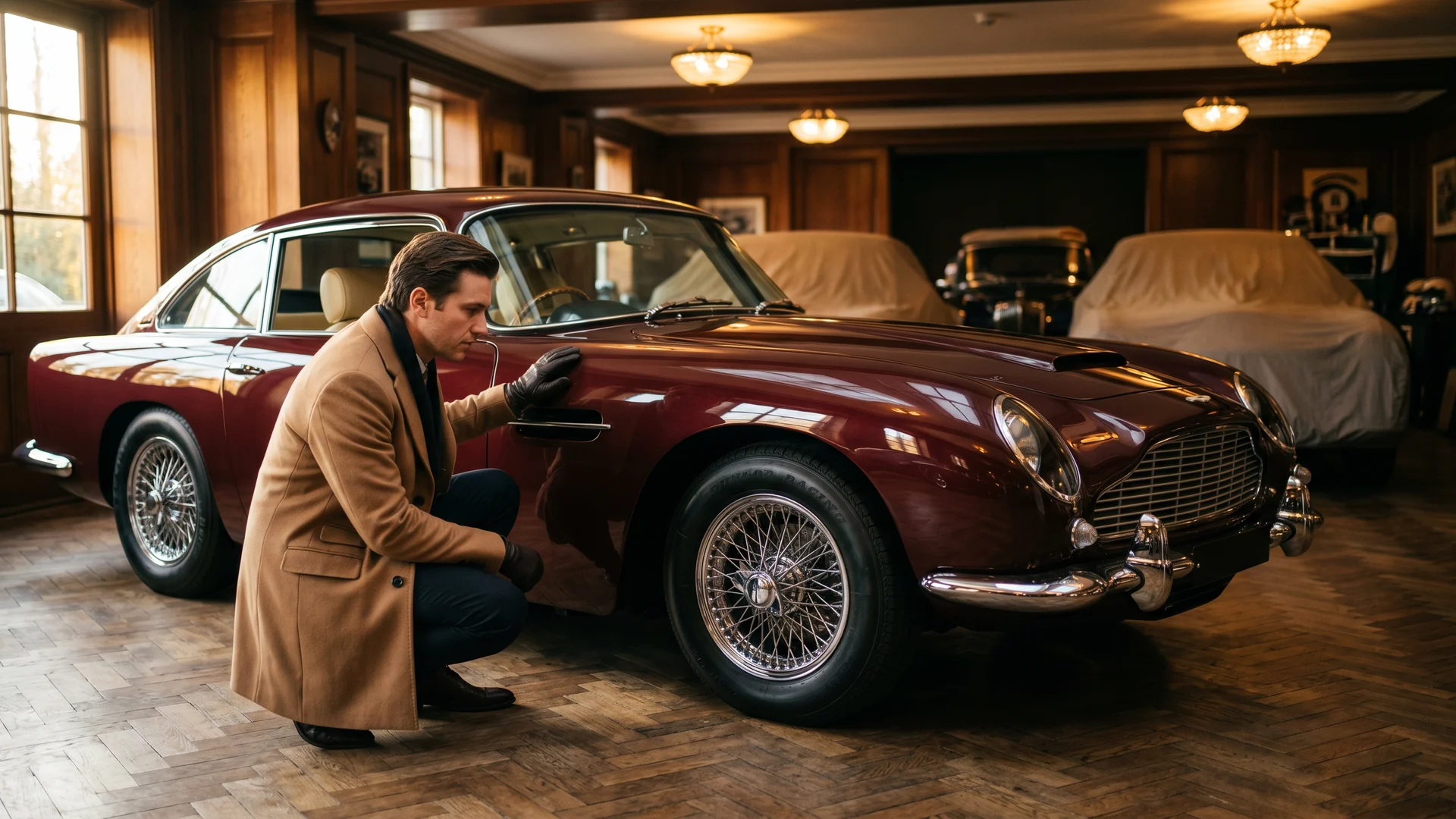
Never buy a classic car without a marque-specialist pre-purchase inspection, and budget 15 to 25 percent above the purchase price for inevitable first-year sorting costs.
Key Takeaways
- Define your purpose first: a concours Jaguar E-Type Series 1 3.8 Roadster can command $350,000 or more at RM Sotheby's, while a driver-quality example runs $140,000 to $180,000.
- Budget beyond the purchase price: pre-purchase inspections cost $400 to $2,000, enclosed US transport runs $1,500 to $3,500, and sorting can add 15 to 25 percent within the first year.
- Search across multiple channels including Hemmings (since 1954), Bring a Trailer (over 50,000 cars sold), the major auction houses RM Sotheby's, Gooding, and Bonhams, and marque-specific forums.
- The single most important rule is a comprehensive, invasive pre-purchase inspection by a marque specialist unconnected to the seller, including compression and leak-down tests.
- Numbers-matching status can add a 50 to 100 percent premium; a Ferrari 250 GT Lusso with its original Colombo V12 verified in the Red Book commands $2.2 to $2.8 million.
- Use enclosed transport from gold-standard carriers and never drive an unfamiliar classic hundreds of miles home on its maiden voyage.
- Buy agreed-value insurance from specialists like Hagerty or Grundy, often $400 to $1,200 annually for a $100,000 car, before the car turns a wheel under your ownership.
🌐 Also available in: Deutsch
The Complete Classic Car Buyer’s Guide: Navigate the Market with Confidence
Purchasing a classic car is one of the most exhilarating experiences an automotive enthusiast can undertake. The smell of aged leather, the mechanical tactility of a carbureted engine, the timeless lines of a design conceived decades before computers dominated styling studios, these are the rewards. But the path to ownership is littered with pitfalls that can turn a dream into a financial nightmare. This comprehensive guide walks you through every stage of the buying process, from defining your goals to handing over the cash and driving, or trailering, your prize home. Whether you are seeking a concours-winning Ferrari, a patina-rich pickup, or anything in between, the principles that follow apply universally and have been honed through decades of collective experience in the collector-car community.
Define Your Purpose Before You Spend a Dime
Too many first-time buyers fall in love with a shape before asking themselves what they actually want from the car. Are you seeking a weekend cruiser for Cars and Coffee meets? A concours-level showpiece destined for Pebble Beach or Villa d’Este? A rolling restoration project you can tinker with in your garage on Saturday mornings? Or are you speculating on appreciation, treating the car as an alternative asset class alongside your stock portfolio and real-estate holdings? Each answer points toward a different marque, a different condition grade, and a substantially different budget. A concours-grade Jaguar E-Type Series 1 3.8 Roadster might command $350,000 or more at RM Sotheby’s, while a driver-quality example of the same model, perfectly presentable, mechanically sorted, but not a trophy contender, can be found in the $140,000 to $180,000 range. A Ferrari 308 GTB, once dismissed as the poster child of affordable exotic ownership, has climbed from the $30,000 range a decade ago to $80,000 to $150,000 today depending on specification: glass body or steel body, carbureted or injected, dry sump or wet sump. Each variant appeals to a different buyer with different expectations, and buying the wrong one for your intended use is an expensive mistake you will regret every time you turn the key. Be brutally honest with yourself about what you want from the car before you type your first search query into Hemmings or Bring a Trailer. Write down your goals, literally, on paper, and refer to them every time a tempting listing threatens to lure you off course.
Set a Realistic Budget: and Pad It Generously
The purchase price is only the beginning of your financial commitment. A classic car budget must account for the pre-purchase inspection cost, which ranges from $400 to $2,000 or more depending on the complexity of the marque and the depth of the inspection you commission. A Ferrari PPI that includes a leak-down test on all twelve cylinders, a borescope examination of the cylinder walls, a paint-meter reading of every panel, and a thorough road test from a marque specialist like Bob Smith Coachworks in Gainesville, Texas, or Ferrari of Newport Beach can run north of $1,500. Then there is transport: enclosed transport for a valuable classic across the continental United States costs between $1,500 and $3,500 depending on distance and the carrier’s reputation, while international shipping from Europe adds $3,000 to $6,000 plus customs duties, which for cars over 25 years old entering the United States stand at a relatively modest 2.5 percent for passenger vehicles, but consult a customs broker, because misclassification can be costly. Insurance, climate-controlled storage if you lack a suitable garage, and the inevitable sorting costs that every newly purchased classic demands within the first six months, new tires because the date codes revealed they were manufactured during the Clinton administration, a brake system overhaul because the fluid looks like coffee, a carburetor rebuild because it has not been touched since Nixon was in office, can easily consume an additional 15 to 25 percent of the purchase price within the first year of ownership. If you are paying $100,000 for the car, plan to spend $130,000 before you are truly settled and enjoying the machine without anxiety. The buyers who get into trouble are the ones who stretch to afford the purchase price and have nothing left for the inevitable sorting. Do not be that buyer.
Where to Find the Right Car: The Modern Search Ecosystem
The classic-car market has fragmented dramatically over the past decade, and the smart buyer searches across multiple channels simultaneously. Traditional classifieds still matter: Hemmings Motor News, the granddaddy of the hobby since 1954, remains indispensable for American classics, European imports, and everything in between. Its online platform lists thousands of cars at any given moment, and the print edition retains a loyal following among older sellers who may not have embraced digital marketplaces. Bring a Trailer has revolutionized the online auction space, with over 50,000 cars sold since its founding and an average of 250 auctions running at any given time across every conceivable category from pre-war Bugattis to 1990s Japanese performance icons. Its transparent comment sections, where marque experts dissect every photograph, every claim in the listing text, and every detail visible or suspiciously absent, provide a level of crowd-sourced due diligence unmatched by any other platform. The peanut gallery, as it is affectionately known, will spot a misaligned bumper, a non-original hose clamp, or an inconsistent panel gap within minutes of a listing going live. For the upper echelon of the market, RM Sotheby’s, Gooding and Company, and Bonhams handle the seven- and eight-figure transactions with catalogues that are works of scholarship in their own right. A 1962 Ferrari 250 GTO sold through RM Sotheby’s in 2018 for $48.4 million, while Gooding achieved $22.5 million for a 1955 Ferrari 410 Sport Spider in 2022 at Pebble Beach, the very car driven by Carroll Shelby and Juan Manuel Fangio during its period competition career. Specialist dealers remain vital intermediaries for buyers who want a curated, sorted, and warranteed car without the uncertainty of the auction block, albeit at a premium of 15 to 25 percent over what the same car might bring in a private-party transaction. Finally, marque-specific forums like FerrariChat, AlfaBB, Pelican Parts for Porsche, the Sunbeam Alpine Owners Club, and countless others often surface the best cars before they ever hit public listings. Cars offered within enthusiast communities tend to be better documented, better maintained, and more honestly represented than those on open marketplaces. Build relationships in these communities before you need them; the trust you earn will pay dividends when a desirable car changes hands quietly among members.
The Pre-Purchase Inspection: The Single Most Important Rule
No advice in this entire guide matters more than this: never, ever, under any circumstances, buy a classic car without a pre-purchase inspection performed by a marque specialist who has no connection to the seller. The inspection should be comprehensive and invasive. A compression test and leak-down test for the engine tell you the health of the rings, valves, and head gaskets before you ever hear the engine run. A thorough examination of the chassis and body, preferably on a lift, with good lighting, reveals rust, accident damage, poorly executed repairs, and excessive filler that a shiny paint job was designed to conceal. A close reading of every panel with a paint meter identifies resprays, and inconsistent readings across panels tell a story the seller may not have disclosed. Verification of numbers-matching status, where the engine, transmission, and chassis numbers align with the factory build record, is essential for cars where originality drives value. For Italian cars of the 1950s through 1970s, rust is the single greatest enemy. Ferraris and Maseratis of this era were built with minimal corrosion protection at the factory; hidden rot in the sills, floor pans, door bottoms, and A-pillars can turn what appears to be a solid driver into a body-off restoration costing $200,000 or more before the first mechanical component is addressed. For Porsche 911s from the 1965 through 1989 era, the long-hood cars, the G-Series, and the early 964 generation, the areas around the torsion-bar mounts, the battery tray, the front suspension pan, and the rear parcel shelf demand particularly close scrutiny, as rust in these structural areas is both common and expensive to repair properly. For British sports cars, MGs, Triumphs, Austin-Healeys, Jaguars, the sills, floor pans, and the area around the rear leaf-spring mounts are the usual suspects. A PPI that reveals $15,000 in deferred maintenance and needed repairs gives you negotiating leverage and a realistic picture of what ownership will actually cost. Skipping the PPI to save $800 leaves you exposed to a surprise bill you cannot contest after the money has changed hands and the seller has disappeared. There is no refund counter in the classic-car world. You buy the car, and you buy its problems. Know what you are buying.
Verifying Authenticity and Documenting Provenance
Numbers-matching status can mean a 50 to 100 percent premium for certain models, and the documentation that proves it is worth its weight in gold. A Ferrari 250 GT Lusso with its original Colombo V12 engine, verified by the Ferrari Classiche program and documented in the Red Book, commands $2.2 to $2.8 million in today’s market. An otherwise identical Lusso with a replacement engine, even a correct-type unit from another Lusso, might struggle to reach $1.5 million, and it will take longer to sell. The same principle applies across the market: a 1970 Plymouth Hemi ‘Cuda with its original, numbers-matching 426 Hemi and four-speed transmission is worth double or more what a non-matching car will bring, and the documentation package that proves the match, the factory broadcast sheet, the fender tag, the original window sticker if it survives, is as valuable as the engine itself. Obtain a factory build record or heritage certificate wherever one is available. Porsche provides a Certificate of Authenticity that confirms the original specification and matching numbers. Ferrari’s Classiche program issues the Red Book after a thorough inspection by factory-trained experts. The Jaguar Heritage Trust supplies a production record trace that details the car’s original configuration, build date, and delivery destination. Mercedes-Benz Classic Center can verify chassis data cards and provide detailed build information for any Mercedes dating back to the earliest days of the marque. For American muscle cars, services like Galen Govier’s Mopar decoding for Chrysler products or the Marti Auto Works report for Fords authenticate option codes, production figures, and the car’s place within its production run. Documentation of the ownership chain, service records, correspondence between previous owners, period photographs showing the car in its earlier life, restoration invoices, and concours judging sheets, adds both monetary value and peace of mind. A well-documented car tells its story, and that story is part of what you are paying for. Conversely, a car with no documentation, no service records, no ownership history, no verification of authenticity, is a mystery, and mysteries in the classic-car market are usually expensive to solve.
Negotiation Strategy and Closing the Transaction
Armed with your PPI report and thorough market research, enter negotiations knowing exactly where your walk-away number lies. Use Hagerty’s valuation tools as a baseline, but validate against recent Bring a Trailer results, auction records from the major houses, and asking prices for comparable cars currently on the market. Do not be afraid to negotiate hard on deferred maintenance: a car that needs $20,000 in mechanical sorting, brakes, suspension bushings, a radiator re-core, tires, and a full fluid service, is objectively not worth the same money as a fully sorted example that needs nothing. Present the PPI findings calmly and factually: these are the issues the specialist found, this is what it will cost to address them at market rates, and this is the adjusted offer that reflects those realities. If the seller balks, be prepared to walk. There is always another car. Payment methods vary with transaction size and distance: wire transfers are standard for transactions over $20,000 and provide a clear, irreversible paper trail. For online purchases where you cannot meet the seller in person, escrow services like KeySavvy or Escrow.com add meaningful protection by holding your funds until you confirm receipt and acceptance of the vehicle. Ensure the title is clean, signed, and dated correctly before any funds move. Verify that the seller’s name on the title matches their identification, and that there are no liens recorded against the vehicle. For high-value transactions involving six-figure sums or more, consider having a bill of sale drafted or at least reviewed by an attorney who is familiar with collector-car transactions and the specific laws of the states involved. A few hundred dollars in legal fees is cheap insurance against a transaction gone wrong.
Post-Purchase: Transport, Insurance, and the First Drive
Resist the powerful temptation to drive an unfamiliar classic hundreds of miles home on its maiden voyage. Even if the seller assures you the car is “ready to drive across the country,” you do not know this car yet. Enclosed transport from a reputable carrier, Reliable Carriers, Intercity Lines, Passport Transport, Plycar, and Horseless Carriage are the gold standard, with decades of experience handling valuable automobiles, is a modest insurance policy against a roadside breakdown in a remote area with no cell service and no classic-friendly mechanic for a hundred miles. Before your first drive, change every fluid in the car: engine oil, transmission fluid, differential oil, brake fluid, coolant, and power-steering fluid if equipped. Inspect every tire for date codes, anything over six years old is suspect regardless of how much tread remains, and anything over ten years old is dangerous at any speed, and replace as needed. Check the entire braking system: pad and shoe thickness, rotor and drum condition, flexible hose integrity, and brake-line security. Verify that all lights, signals, wipers, and safety equipment function correctly. Insure the car before it turns a wheel under your ownership. Hagerty, Grundy, American Collectors Insurance, Heacock Classic, and Chubb offer agreed-value policies that protect your investment at a fraction of what standard auto insurance would cost, often $400 to $1,200 annually for a $100,000 car, depending on usage limits, storage conditions, and your driving record. The agreed-value structure means you and the insurer have predetermined the car’s worth; in the event of a total loss, you receive exactly that amount, with no depreciation and no haggling. This is the only appropriate insurance structure for a classic car, and you should accept nothing less.
Building Your Ownership File
From the moment you commit to a purchase, start building a provenance file that will pay dividends when the day comes to sell. Keep every receipt, every service record, every photograph of work in progress. Document your own stewardship: dates, mileages, and descriptions of every service performed, every part replaced, every improvement made. Take photographs of the car at events, on tours, and in your garage. This file transforms your ownership period from an unknown gap in the car’s history into a documented chapter of careful stewardship, and it makes the car easier to sell and more valuable when that day arrives. The best provenance files span decades and multiple owners, each contributing their chapter to the car’s story. Be the owner who adds a thorough, well-organized, and honest chapter to that narrative.
Frequently Asked Questions (FAQ)
How much should I budget beyond the purchase price when buying a classic car?
Plan for the purchase price plus 15 to 25 percent in first-year sorting costs. The pre-purchase inspection runs $400 to $2,000, enclosed US transport costs $1,500 to $3,500, and international shipping from Europe adds $3,000 to $6,000. If you pay $100,000 for the car, expect to spend $130,000 before you are settled.
Why is a pre-purchase inspection so important when buying a vintage car?
It is the single most important rule: never buy without a comprehensive inspection by a marque specialist unconnected to the seller. Compression and leak-down tests reveal engine health, a lift inspection exposes rust and hidden accident damage, and a paint meter identifies resprays. There is no refund counter in the classic-car world, so know what you are buying.
Where can I find classic cars for sale beyond local listings?
Search multiple channels simultaneously. Hemmings Motor News, indispensable since 1954, covers American and European classics. Bring a Trailer has sold over 50,000 cars with crowd-sourced due diligence in its comments. RM Sotheby's, Gooding and Company, and Bonhams handle high-end sales, while marque-specific forums like FerrariChat often surface the best cars first.
How much does numbers-matching status add to a classic car's value?
Numbers-matching status can mean a 50 to 100 percent premium for certain models. A Ferrari 250 GT Lusso with its original Colombo V12, verified by Ferrari Classiche in the Red Book, commands $2.2 to $2.8 million, while an identical Lusso with a replacement engine might struggle to reach $1.5 million and take longer to sell.
What documentation should I look for to verify a classic car's authenticity?
Obtain a factory build record or heritage certificate. Porsche issues a Certificate of Authenticity, Ferrari's Classiche program supplies the Red Book, the Jaguar Heritage Trust provides a production record trace, and Mercedes-Benz Classic Center verifies chassis data cards. For American muscle, Galen Govier decodes Mopar and Marti Auto Works reports authenticate Fords.
What rust areas should I check when buying a vintage Porsche 911 or Italian sports car?
On Porsche 911s from 1965 to 1989, scrutinize the torsion-bar mounts, battery tray, front suspension pan, and rear parcel shelf. For 1950s to 1970s Ferraris and Maseratis built with minimal corrosion protection, hidden rot in the sills, floor pans, door bottoms, and A-pillars can turn a driver into a $200,000-plus body-off restoration.
How should I pay for and close a classic car purchase safely?
Wire transfers are standard for transactions over $20,000 and provide an irreversible paper trail. For online purchases, escrow services like KeySavvy or Escrow.com hold funds until you accept the vehicle. Ensure the title is clean, signed, and lien-free, and for six-figure deals consider having an attorney review the bill of sale.
What insurance should I get for a classic car?
Buy an agreed-value policy from a specialist insurer like Hagerty, Grundy, American Collectors Insurance, Heacock Classic, or Chubb before the car turns a wheel. These often cost $400 to $1,200 annually for a $100,000 car. With agreed value, you and the insurer predetermine the car's worth, so a total loss pays exactly that amount with no depreciation.
More from Blog
The Future of Classic Car Collecting: Trends Shaping the Next Generation
The future of classic car collecting: why 2035 ICE bans spare existing cars, plus e-fuels, shifting demographics, electromods and fractional ownership…
Classic Car Insurance Guide: Protecting Your Vintage Investment
Classic car insurance guide: why agreed-value policies beat stated and actual cash value, how Hagerty, Grundy and Chubb compare, plus costs and covera…
Classic Car History Timeline: From Benz to the Modern Collector Era
Classic car history timeline from the 1886 Benz Patent-Motorwagen through coachbuilding, muscle cars and supercars to modern collectibles. Discover th…