Most Valuable Classic Cars: The World’s Most Expensive Vintage Automobiles
Discover the most valuable classic cars ever sold, from the 143 million dollar Mercedes 300 SLR Uhlenhaut Coupe to the Ferrari 250 GTO and McLaren F1.…
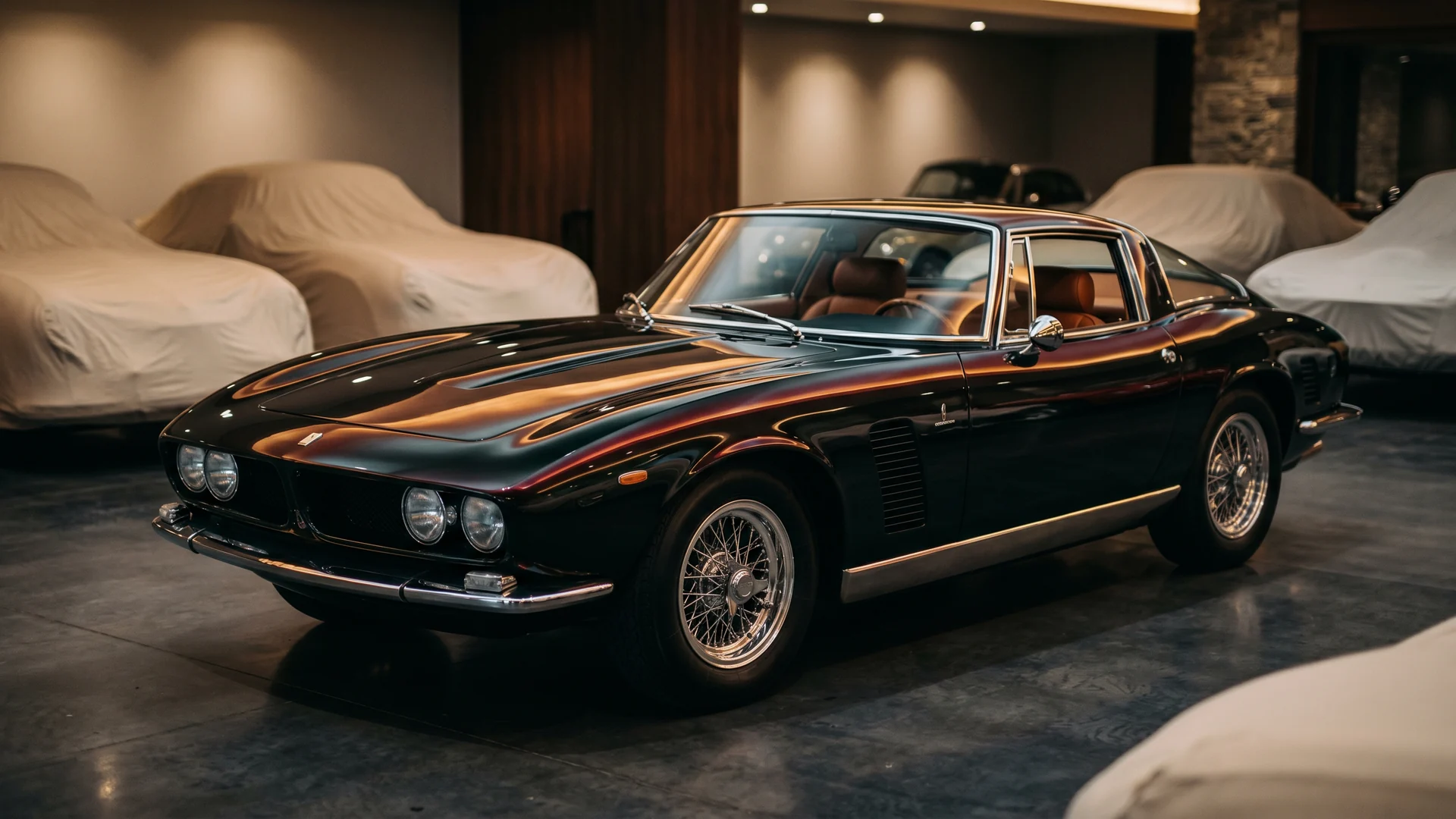
The 1955 Mercedes-Benz 300 SLR Uhlenhaut Coupe is the world's most valuable classic car, sold privately in 2022 for 135 million euros, about 143 million dollars.
Key Takeaways
- The 1955 Mercedes-Benz 300 SLR Uhlenhaut Coupe sold privately through RM Sotheby's in May 2022 for 135 million euros (about 143 million dollars), nearly triple the previous record.
- The 1962 Ferrari 250 GTO chassis 3413 GT set the standing public-auction record at 48.4 million dollars in 2018, with only 36 GTOs built and 33 surviving.
- Genuine racing pedigree commands a steep premium: the value gap between a Le Mans-history Jaguar D-Type and a similar car without provenance can exceed 100 percent.
- Only four Bugatti Type 57SC Atlantics were built and two survive, with Ralph Lauren's chassis 57374 estimated at 30 to 40 million dollars.
- The McLaren F1 (106 built, 64 road cars) has traded privately for 15 to 20 million dollars and set a 240.1 mph production-car top-speed record.
- The 1971 Plymouth Hemi 'Cuda Convertible sold at Mecum in 2014 for 3.5 million dollars, a benchmark for American muscle-car values.
- The Hagerty Blue Chip Index has shown roughly 8 to 10 percent compound annual growth over two decades, though the 2008 crisis triggered a 15 to 25 percent correction.
🌐 Also available in: Deutsch
The Most Valuable Classic Cars in the World: Rarity, Racing Pedigree, and Record-Breaking Sales
The upper echelon of the classic car market operates in a financial stratosphere where eight-figure auction results have become almost routine, nine-figure private sales have moved from whispered rumor to documented reality, and the most desirable cars trade less like vehicles and more like masterpieces of fine art. These automobiles are not merely transportation. They are rolling sculptures, financial instruments, historical artifacts, and tangible stores of value whose prices are driven by an intricate alchemy of racing provenance, design significance, extreme rarity, and the immutable laws of supply and demand in a market where the supply side is permanently fixed and demand continues to grow from a global pool of ultra-high-net-worth collectors. This article surveys the most valuable classic cars ever sold publicly and privately, examines the specific forces that push individual cars into the tens of millions of dollars, and identifies the models poised to join this exclusive club in the years ahead. What makes a car worth more than a masterpiece painting or a prime Manhattan penthouse is never a single factor but rather a convergence of history, beauty, scarcity, and the passionate competition among collectors who have more capital than opportunities to deploy it.
The All-Time Record Holders
The 1955 Mercedes-Benz 300 SLR Uhlenhaut Coupé stands alone at the summit of the market, and by a margin so vast that it recalibrated the entire collector-car world’s understanding of what an automobile can be worth. In May of 2022, RM Sotheby’s facilitated a private sale of one of only two examples ever built to a private collector for €135 million, which was approximately $143 million at the exchange rates prevailing at the time. The sale shattered all previous records by a factor of nearly three. Named after Rudolf Uhlenhaut, the head of the Mercedes-Benz racing department who used one of the two cars as his personal transport, the 300 SLR Coupé was essentially a road-going version of the all-conquering W196 Grand Prix car that carried Juan Manuel Fangio to two World Championships. Power came from a 3.0-liter straight-eight engine with desmodromic valve actuation, a system that positively closes the valves mechanically rather than relying on springs, allowing higher engine speeds without valve float, producing 310 horsepower, sufficient to propel the car to 180 miles per hour in 1955, a figure that would have been unimaginable for a road car at the time. The sale was conducted with extraordinary care at the Mercedes-Benz Museum in Stuttgart, with the proceeds dedicated to establishing a global scholarship program for young people in the fields of environmental science and decarbonization. The event was not merely a transaction but a cultural moment, covered by major media outlets worldwide and discussed at length in both automotive and art-market circles.
Before the Uhlenhaut Coupé redefined the ceiling, the 1962 Ferrari 250 GTO held the crown for the most valuable car in the world. Chassis 3413 GT, a Series I GTO with extensive period racing history that included class wins and strong finishes in events across Europe, sold through RM Sotheby’s in 2018 for $48.4 million, a public-auction record that still stands. Separately, chassis 4153 GT reportedly changed hands in a private transaction for approximately $70 million, though the exact figure and the identities of the parties involved have never been publicly confirmed. The 250 GTO occupies a unique position in the collector-car pantheon. Only 36 were built between 1962 and 1964, each one combining breathtaking Scaglietti coachwork with a competition pedigree that includes class wins at the Tour de France Automobile, the Targa Florio, and the 24 Hours of Le Mans, where a GTO won its class in both 1962 and 1963. The GTO was the ultimate expression of Enzo Ferrari’s philosophy that racing improves the breed, and every one of the surviving 33 examples, three were destroyed in period accidents, is accounted for, tracked, and coveted by collectors who will likely never sell. Today, privately negotiated GTO sales are believed to range from $60 million to $80 million, though the cars trade so infrequently, typically one changes hands every two or three years, that precise valuations remain inherently speculative.
The 1957 Ferrari 335 Sport Scaglietti sold by Artcurial at the 2016 Rétromobile auction in Paris for €32.1 million, or approximately $35.7 million, held the public-auction record for two years before the GTO surpassed it and remains among the most significant competition Ferraris ever offered at auction. Chassis 0674, one of only four 335 S models constructed, was driven during its period competition career by Mike Hawthorn, Peter Collins, and Maurice Trintignant, three of the most accomplished drivers of the 1950s, and achieved victories including the 1958 Cuban Grand Prix and a strong second-place finish at the 1957 Mille Miglia, the final running of the original open-road endurance race.
The Racing Pedigree Premium
Nothing inflates a classic car’s value more dramatically than genuine period racing history achieved at the highest levels of international competition. A 1954 to 1957 Mercedes-Benz W196 Grand Prix car, either in its open-wheel configuration or the streamlined Monza variant with its enclosed bodywork, would command $50 million or more at auction if one were ever offered. These cars are rarer than GTOs, more historically significant in terms of their direct connection to motorsport’s highest level, and almost entirely locked away in institutional and factory collections that will never sell. Sir Stirling Moss’s 1955 Mille Miglia-winning Mercedes-Benz 300 SLR, the famous number 722 car in which Moss and his co-driver Denis Jenkinson covered 992 miles of Italian public roads in 10 hours, 7 minutes, and 48 seconds at an average speed of nearly 98 miles per hour, is effectively priceless and resides in the Mercedes-Benz Museum collection. A 1956 Maserati 250F of the type driven by Juan Manuel Fangio to his fourth Formula One World Championship in 1957 would likely bring $20 to $30 million at auction, reflecting the model’s beauty, its competition success at the highest level, and its extreme rarity. A 1970 Porsche 917K that competed at the 24 Hours of Le Mans, particularly chassis 917-023, the 1970 winner in the iconic red-and-white Salzburg livery that gave Porsche its first overall victory at La Sarthe, was reportedly valued at $25 to $30 million in private negotiations. The Gulf-liveried 917s made famous by their starring role in the Steve McQueen film Le Mans carry their own Hollywood-derived premium on top of their competition history, a reminder that provenance operates on multiple levels simultaneously.
The 1955 Jaguar D-Type that won the 24 Hours of Le Mans outright, chassis XKD 505, is valued north of $20 million if it were ever to be offered for sale, though like so many of the cars at this level, it resides in a collection where it is unlikely to be sold in the current generation. Even non-winning D-Types with documented period race history, a car that competed at Le Mans and finished, even if it did not win, regularly sell for $7 to $12 million at auction. The value gap between a D-Type with Le Mans history and a similar car without any competition provenance can exceed 100 percent, a stark illustration of the premium that genuine racing history commands in the collector market.
Design Significance and Coachbuilt Rarity
Pre-war coachbuilt cars occupy a distinct and rarefied segment of the collector market where the line between automobile and sculpture blurs into irrelevance. The 1936 Bugatti Type 57SC Atlantic, with its riveted dorsal seam running from the base of the windshield to the tip of the tail, its teardrop coupe body designed by Jean Bugatti, the founder’s son and a stylist of extraordinary talent, and its supercharged 3.3-liter straight-eight engine, is among the most coveted pre-war cars in existence and one of the most beautiful objects created by human hands in any medium. Only four Atlantics were built, and only two survive in forms recognizable as the cars that left Molsheim. When Ralph Lauren’s Atlantic, chassis 57374, with an extraordinary provenance that includes decades of careful stewardship, last changed hands, the price was estimated in the range of $30 to $40 million, though the exact figure remains private. Another Atlantic, chassis 57473, formerly owned by the fashion mogul Peter Mullin and now forming part of the Mullin Automotive Museum collection, carries a comparable valuation and is similarly unlikely ever to be offered for public sale.
The 1937 to 1939 Alfa Romeo 8C 2900B Lungo, with its voluptuous Touring Superleggera coachwork that seems to flow over the chassis like liquid metal and its 2.9-liter supercharged straight-eight engine that was among the most advanced powerplants of the pre-war era, has achieved $18 to $22 million at auction in recent years. The 1938 Alfa Romeo 8C 2900B Touring Berlinetta sold by RM Sotheby’s in 2019 for €16.7 million exemplifies this model’s standing in the market and the reverence with which it is regarded by collectors and historians alike. The 1936 to 1937 Mercedes-Benz 540K Special Roadsters, particularly the long-tail, high-door variant designed by Hermann Ahrens for the most discerning clients of the Sindelfingen coachworks, consistently trade in the $10 to $18 million range, with exceptional examples commanding the upper figure. A 1936 540K Special Roadster sold by RM Sotheby’s at Pebble Beach in 2012 for $11.77 million, and values have appreciated substantially in the years since as the supply of available cars has contracted and the pool of qualified buyers has expanded globally.
The Modern Blue-Chip Portfolio: 1980s Through 2000s
The market for modern classics, cars built in the 1980s, 1990s, and early 2000s, has exploded as a new generation of collectors, many of whom made their wealth in technology, finance, and entrepreneurship, enters the arena with different tastes and reference points than the traditional collector base. The Ferrari F40, produced from 1987 to 1992 with 1,315 examples built as the last car personally approved by Enzo Ferrari before his death in 1988, has appreciated from approximately $400,000 a decade ago to a range of $2.2 to $3.5 million for excellent examples with complete documentation. Low-mileage, US-specification, non-catalyst, non-adjustable-suspension cars with all original books, tools, and accessories command the very top of this range. The Ferrari F50, of which only 349 were built between 1995 and 1997 as a Formula One-derived road car with a naturally aspirated 4.7-liter V12 derived from Ferrari’s 1990 Grand Prix engine, has risen from approximately $1.5 million to a range of $3.5 to $5.5 million in the space of a few years. The Ferrari Enzo, 399 examples built between 2002 and 2004 and named for the company’s founder, now trades at $3.5 to $5 million, having effectively doubled in value since 2019 in one of the most dramatic short-term appreciation curves in recent market history.
The McLaren F1, of which only 106 examples were produced between 1992 and 1998, including 64 road cars, stands as the undisputed king of modern hypercar values and arguably the most important road car of the entire post-war era. Designed by Gordon Murray with a central driving position, a carbon-fiber monocoque, a naturally aspirated 6.1-liter BMW V12 producing 627 horsepower, and a gold-foil-lined engine bay for thermal reflection, the F1 set a production-car top-speed record of 240.1 miles per hour that stood until the Bugatti Veyron’s arrival in 2005. Road-going F1s have traded privately for $15 to $20 million, with the ultra-rare F1 LM-specification cars, only two built to full LM specification, plus five customer cars upgraded to a similar standard, commanding significantly more. Rowan Atkinson’s 1997 McLaren F1, despite having suffered two major accidents, the second in 2011 resulting in repair costs of £910,000, sold in 2015 for £8 million through Taylor and Crawley, a testament to the model’s extraordinary cachet and the market’s willingness to forgive even significant damage when the underlying car is sufficiently special.
The Porsche 959, 292 examples built between 1986 and 1988 as a technological tour de force with twin turbochargers, all-wheel drive, and electronically adjustable suspension, now trades at $1.5 to $2.5 million. The Bugatti EB110, 139 examples built between 1991 and 1995 as the first modern hypercar to wear the Bugatti name, has appreciated into the $1 to $2 million range as the market has belatedly recognized its significance. These cars, dismissed as merely used exotics a decade ago, are now recognized as the modern classics they always were, the collectibles of tomorrow whose values reflect their importance to automotive history.
American Icons Crossing the Million-Dollar Threshold
American collector cars have crossed the seven-figure threshold with increasing regularity, driven by the same forces of rarity, provenance, and condition that propel the international market. The 1971 Plymouth Hemi ‘Cuda Convertible, only 11 examples built with the 426-cubic-inch Hemi V8, and of those, an even smaller number equipped with the four-speed manual transmission, sold at Mecum in 2014 for $3.5 million, establishing a benchmark for American muscle-car values. A 1970 Chevrolet Chevelle SS LS6 Convertible, of which fewer than 20 are believed to have been produced with the 454-cubic-inch, 450-horsepower LS6 engine in the convertible body style, has traded for $1.5 to $2 million in recent private transactions. The 1969 Chevrolet Camaro ZL1, the aluminum-block 427 monster of which only 69 examples were built under Chevrolet’s COPO (Central Office Production Order) program, now commands $800,000 to $1.5 million depending on documentation, provenance, and the specific configuration of each individual car.
Market Dynamics and Investment Considerations
The most valuable classic cars in the world share a common set of attributes: production runs under 100 examples, continuous ownership chains documented from new, period racing history at the highest levels of international competition, and the survival of all original components in matching-numbers configuration. The Hagerty Blue Chip Index, which tracks the very top tier of the market as represented by the most significant and valuable cars trading hands, has shown compound annual growth of approximately 8 to 10 percent over the past two decades, a performance that compares favorably with many traditional asset classes over the same period. However, the market is inherently cyclical and highly sensitive to global economic conditions, as the brief but sharp correction of 15 to 25 percent during the 2008 financial crisis demonstrated. For those with the means to participate at this level, the most valuable classic cars offer a combination of aesthetic pleasure, historical connection, and financial appreciation unmatched by any other collectible asset class. They represent the absolute pinnacle of automotive achievement, preserved and celebrated across generations, and their values reflect their irreplaceable status in the history of human creativity and engineering. The lesson of these extraordinary automobiles is ultimately not about money but about meaning: they endure because they represent the very best that human ingenuity, craftsmanship, and passion can produce, and that is something worth preserving at any price, for as long as there are people who care about the history of the automobile and the art of engineering practiced at its very highest level.
The Future of the Ultra-High-End Market
Looking ahead, the market for the most valuable classic cars appears structurally sound despite periodic corrections. The supply of truly great automobiles is finite and immutable, no more Ferrari 250 GTOs will ever be built, no more Bugatti Atlantics will emerge from Molsheim, and no more Mercedes 300SLR Uhlenhaut Coupés exist beyond the two that have already been accounted for. Meanwhile, the global pool of ultra-high-net-worth individuals continues to grow, particularly in emerging markets where a new generation of collectors is developing an appreciation for the Western automotive canon. The cars at the very top of the market are increasingly viewed not merely as vehicles but as cultural artifacts comparable to the most important works of fine art, and this perception supports valuations that would have seemed fantastical even a decade ago. While the broader classic-car market will always be subject to cycles of enthusiasm and caution, the absolute pinnacle, the cars discussed in this article, operates in a rarefied space where conventional market logic does not fully apply and where the combination of beauty, history, rarity, and desire creates a value proposition that transcends normal economic analysis.
Frequently Asked Questions (FAQ)
What is the most valuable classic car in the world?
The 1955 Mercedes-Benz 300 SLR Uhlenhaut Coupe is the most valuable classic car in the world. In May 2022, RM Sotheby's facilitated a private sale of one of only two examples for 135 million euros, approximately 143 million dollars, shattering all previous records by a factor of nearly three.
How much did the Ferrari 250 GTO sell for at auction?
The 1962 Ferrari 250 GTO chassis 3413 GT sold through RM Sotheby's in 2018 for 48.4 million dollars, a public-auction record that still stands. Separately, chassis 4153 GT reportedly changed hands privately for about 70 million dollars, though that figure was never publicly confirmed.
Why are classic Ferrari 250 GTOs so expensive?
Only 36 Ferrari 250 GTOs were built between 1962 and 1964, and just 33 survive. Each combines Scaglietti coachwork with a competition pedigree including class wins at the Tour de France, Targa Florio, and Le Mans. They trade so rarely, roughly one every two or three years, that valuations remain speculative.
How much does a McLaren F1 cost today?
Road-going McLaren F1s have traded privately for 15 to 20 million dollars, with ultra-rare LM-specification cars commanding significantly more. Only 106 examples were produced between 1992 and 1998, including 64 road cars. Designed by Gordon Murray, the F1 set a 240.1 mph production-car top-speed record that stood until 2005.
What makes a classic car valuable to collectors?
The most valuable classic cars share production runs under 100 examples, continuous documented ownership, period racing history at the highest levels, and original matching-numbers components. Value comes from a convergence of racing provenance, design significance, extreme rarity, and growing demand from a fixed supply of cars.
Which American classic car set a muscle-car value record?
The 1971 Plymouth Hemi 'Cuda Convertible set a benchmark by selling at Mecum in 2014 for 3.5 million dollars. Only 11 were built with the 426-cubic-inch Hemi V8, and even fewer had the four-speed manual transmission, driving its extreme rarity and value among American muscle cars.
Are classic cars a good investment?
The Hagerty Blue Chip Index, tracking the market's top tier, has shown roughly 8 to 10 percent compound annual growth over two decades, comparing favorably with traditional asset classes. However, the market is cyclical and sensitive to economic conditions, as the 2008 crisis showed with a sharp 15 to 25 percent correction.
How much is the Bugatti Type 57SC Atlantic worth?
Only four Bugatti Type 57SC Atlantics were built and two survive recognizably. Ralph Lauren's chassis 57374 was estimated at 30 to 40 million dollars when it last changed hands. Another, chassis 57473 once owned by Peter Mullin, carries a comparable valuation and is unlikely ever to be sold publicly.
What is the most valuable classic car in the world?
What is the record price for a car sold at public auction?
Why does racing pedigree add so much value?
More from Blog
The Future of Classic Car Collecting: Trends Shaping the Next Generation
The future of classic car collecting: why 2035 ICE bans spare existing cars, plus e-fuels, shifting demographics, electromods and fractional ownership…
Classic Car Insurance Guide: Protecting Your Vintage Investment
Classic car insurance guide: why agreed-value policies beat stated and actual cash value, how Hagerty, Grundy and Chubb compare, plus costs and covera…
Classic Car History Timeline: From Benz to the Modern Collector Era
Classic car history timeline from the 1886 Benz Patent-Motorwagen through coachbuilding, muscle cars and supercars to modern collectibles. Discover th…