Classic Car Investment Guide: Building Wealth Through Automotive Collecting
Classic car investment guide: how collector cars perform as an alternative asset, top-returning segments like Ferrari 250 and Porsche 911, plus real costs and tax.…
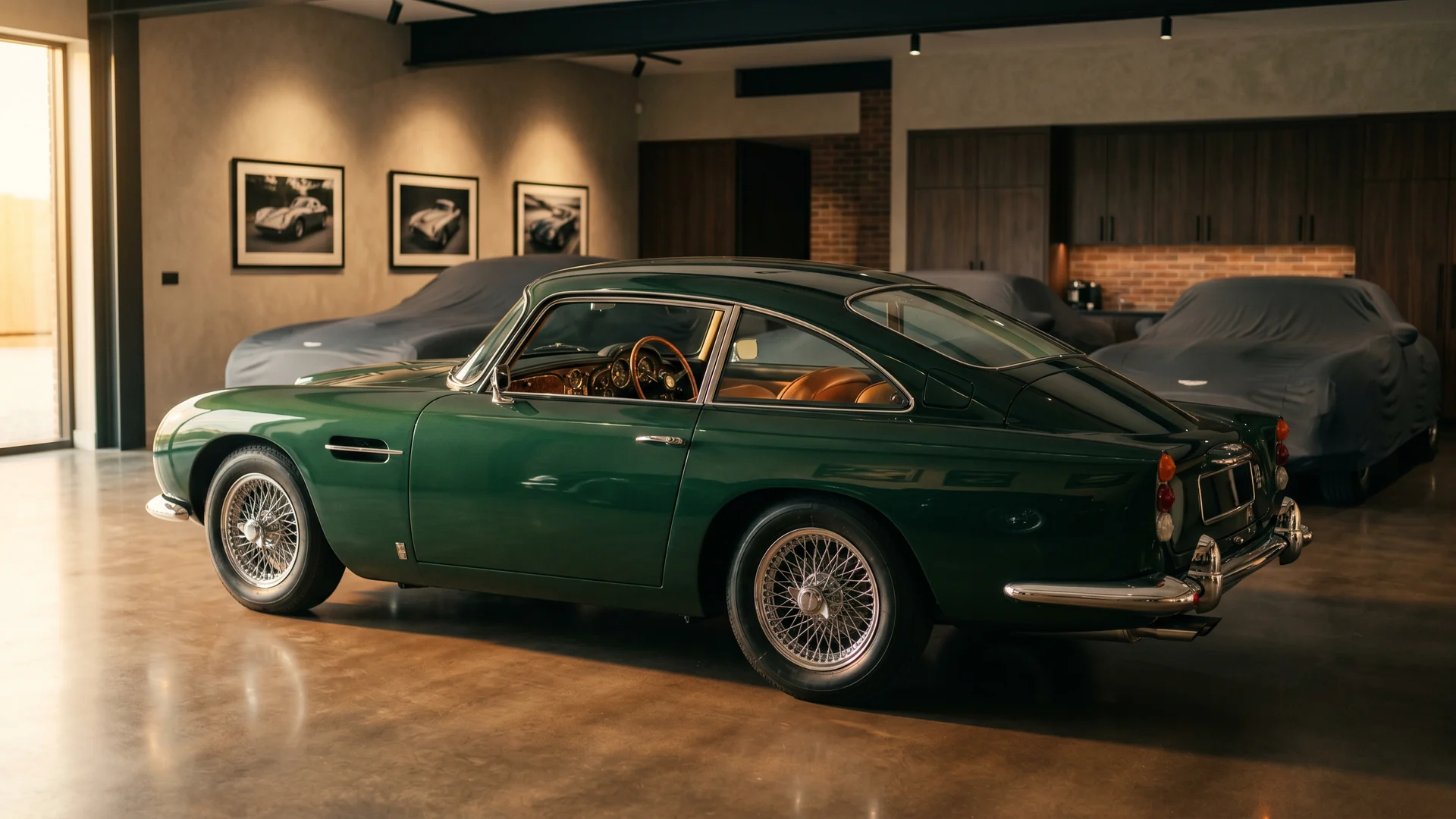
Classic cars can be a genuine alternative asset, with the Hagerty Blue Chip Index returning roughly 8 to 10 percent annually, but high carrying costs, steep transaction fees and illiquidity must be weighed.
Key Takeaways
- The Hagerty Blue Chip Index, tracking top-tier cars like the Ferrari 250 GTO and Mercedes 300SL Gullwing, has delivered roughly 8 to 10 percent compound annual returns since its 2006 baseline.
- In Knight Frank's 2024 Wealth Report, classic cars ranked third among luxury assets over ten years, returning 185 percent, behind rare whisky at 280 percent and fine wine at 149 percent.
- A Ferrari 250 GT SWB bought for $300,000 to $500,000 in 2000 now trades around $8 to $12 million, while a 250 GTO bought for under $100,000 in the early 1980s is now a $60 to $80 million asset.
- Annual carrying costs, including specialist insurance, climate-controlled storage and maintenance, typically consume 1.5 to 5 percent of a car's value each year.
- Transaction costs are steep: auction buyer's premiums of 10 to 15 percent and seller's commissions of 5 to 10 percent can turn a $100,000 apparent gain into a net loss.
- Investment-grade value rests on five criteria: rarity (production under 500 units), provenance, originality (matching numbers), design significance, and condition on the 1-to-5 scale.
- In the United States, profits from selling classic cars are taxed at the 28 percent collectibles capital gains rate, higher than the long-term rate on securities.
🌐 Also available in: Deutsch
The Classic Car Investment Guide: Analyzing the Collector Market as an Alternative Asset Class
The classic car market has evolved over the past three decades from a hobbyist’s playground into a recognized alternative asset class that attracts sophisticated capital from family offices, high-net-worth individuals, specialized investment funds, and collectors who view their cars through a dual lens of passion and portfolio allocation. Between 2010 and 2025, the market experienced a historic surge that drew comparisons to the fine-art market in its scale, its media attention, and the velocity of its price appreciation in certain segments. While the primary return on a classic car will always be the joy of ownership, the tactile pleasure of a gated shifter clicking through its gates, the sound of a carbureted V12 on cold start, the visual satisfaction of a design that has aged into timelessness rather than dated into irrelevance, informed collectors increasingly evaluate their acquisitions with the same analytical rigor they apply to their equity, real-estate, and alternative-asset portfolios. This comprehensive guide examines the market indices that track collector-car values, compares the asset-class performance of automobiles against traditional investments, analyzes the segments that have delivered the strongest returns, and outlines the structural economics, holding costs, transaction costs, tax implications, and exit-strategy considerations, that determine whether an investment in a classic car is likely to generate a positive financial outcome over the intended holding period.
Measuring the Market: Indices and Data
Hagerty, the world’s largest insurer of classic cars, publishes the most widely cited and methodologically sophisticated suite of collector-car market indices. The Hagerty Blue Chip Index tracks the very top tier of the market, Ferrari 250 GTOs, Mercedes-Benz 300SL Gullwings, pre-war Alfa Romeos, Porsche 356 Speedsters, and the other cars that represent the acknowledged masterpieces of automotive history. Since its baseline year of 2006, the Blue Chip Index has delivered compound annual returns of approximately 8 to 10 percent, a performance that compares favorably with many traditional asset classes and has attracted the attention of portfolio managers seeking uncorrelated returns. The Hagerty 1950s American Classics Index and the Hagerty British Car Index provide fine-grained views of specific market segments that appeal to different collector demographics. The Historic Automobile Group International indices, developed with institutional-investor rigor by a team of financial analysts and automotive experts, track seven distinct market segments with the kind of methodology that pension funds and endowments require before allocating capital to an alternative asset class. Knight Frank’s Luxury Investment Index, published as part of the firm’s annual Wealth Report, consistently ranks classic cars among the top-performing collectible asset classes alongside fine wine, rare watches, and contemporary art. In their 2024 Wealth Report, classic cars ranked third among luxury assets over the trailing ten-year horizon, returning 185 percent cumulatively, a performance exceeded only by rare whisky at 280 percent and fine wine at 149 percent, and substantially ahead of art, jewelry, and handbags over the same period.
Asset-Class Performance: Cars versus Traditional Investments
Comparing classic cars to the traditional financial assets that dominate most portfolios requires careful nuance and an honest accounting of the structural differences between a liquid security and a physical, depreciating-yet-appreciating asset. The S&P 500 Index has delivered approximately 10 percent annualized total returns over the past half-century, inclusive of reinvested dividends, while the Hagerty Blue Chip Index has tracked roughly 8 to 10 percent over its shorter but still meaningful history. On the surface, these numbers suggest rough parity. But the comparison masks significant differences that cut in both directions. The correlation between classic-car values and equity markets is demonstrably weak: cars appreciated during the volatile 2010 to 2012 period when equity markets were turbulent, and the dramatic post-pandemic surge in collector-car values from 2020 through early 2022, a period during which some segments of the market doubled or more, coincided with but was not entirely driven by the broader asset inflation that affected equities, real estate, and cryptocurrencies during the same period. This low correlation with traditional financial assets makes classic cars an attractive portfolio diversifier, in theory, for investors with the liquidity, the risk tolerance, and the patience to hold an asset that cannot be sold at the click of a mouse.
Counterbalancing the performance narrative, however, are significant structural disadvantages that must be weighed honestly before any investment allocation is made. Classic cars generate zero income while held, there are no dividends, no interest payments, no rental yield, nothing but the costs of ownership. Ongoing carrying costs, specialized insurance, climate-controlled storage, and regular maintenance even for a car that is driven only occasionally, typically consume 2 to 4 percent of the vehicle’s value each year. Transaction costs in the classic-car market are punishingly high relative to financial markets: auction buyer’s premiums of 10 to 15 percent on the purchase, seller’s commissions of 5 to 10 percent on the sale, and transport, inspection, and legal costs that add additional percentage points at both ends of the transaction. A $500,000 Ferrari 275 GTB purchased at auction costs the buyer $560,000 after the buyer’s premium is added. If the same car is sold two years later for $600,000 at the hammer, the seller receives approximately $540,000 after the seller’s commission, generating a net loss of $20,000 on the investment despite an apparent $100,000 appreciation in value. Extreme illiquidity is another reality: selling a $2 million Ferrari can take months of marketing through dealers, auction houses, or private channels, and during that period the market can move against the seller. And unlike securities, which benefit from continuous, transparent mark-to-market pricing, a classic car’s value is ultimately an estimate until a transaction occurs, at which point the price that buyer and seller agree upon may differ substantially from the valuation that appeared on the owner’s spreadsheet.
The Segments That Have Outperformed: Where the Returns Are
The Ferrari 250 series, built from approximately 1958 through 1964 and encompassing the 250 GT SWB Berlinetta, the 250 GT Lusso, and the ultimate expression of the line, the 250 GTO, has been the single greatest generator of wealth in the history of the collector-car market. A 250 GT SWB that could be purchased in the year 2000 for between $300,000 and $500,000, a significant sum at the time but accessible to a committed collector, now trades comfortably in the range of $8 to $12 million, representing a twenty- to thirty-fold return over two decades that few other asset classes have matched. A 250 GTO purchased in the early 1980s for under $100,000 is now a $60 to $80 million asset, an appreciation curve so extreme that it has become the stuff of collector legend. The Ferrari 275 GTB, built from 1964 to 1968 as the successor to the 250 series, has followed a similar trajectory, with values rising from approximately $400,000 in 2005 to a range of $2 to $3 million for the most desirable four-cam variants today.
The Mercedes-Benz 300SL Gullwing, produced from 1954 to 1957 with 1,400 examples built, offers one of the most well-documented case studies in collector-car appreciation. In the 1970s, a Gullwing in driving condition could be purchased for $10,000 to $15,000, prices that reflected the car’s status as merely an interesting used car rather than the collectible icon it would become. By the year 2000, Gullwings had appreciated into the $200,000 to $300,000 range. Between 2005 and 2015, values climbed from roughly $400,000 to $1.2 million. Today, a steel-bodied Gullwing in excellent condition commands $1.5 to $2.5 million at auction, while the ultra-rare alloy-bodied examples, only 29 were built, with lightweight aluminum body panels that shaved approximately 200 pounds from the car’s weight and were intended primarily for competition use, trade in the range of $7 to $9 million. The Gullwing’s investment case rests on the solid foundation of genuine racing DNA derived from the W194 competition car, an iconic design that is universally recognized as one of the most beautiful shapes ever applied to an automobile, and tangible scarcity that ensures supply will never expand to meet growing global demand.
The air-cooled Porsche 911 market has been perhaps the defining appreciation story of the decade from 2015 to 2025, a period during which values for the most desirable models increased by factors that surprised even veteran market observers. A 1973 911 Carrera RS 2.7, the lightweight homologation special with its distinctive ducktail spoiler, thin-gauge steel body panels, and 210-horsepower mechanical-fuel-injection engine, that was a $150,000 car in 2010 now trades in a range of $600,000 to $1.2 million depending on condition, originality, and the specific variant. The 993-generation 911 Turbo S, built in 1997 and 1998 as the final and most powerful expression of the air-cooled Turbo lineage, has appreciated from approximately $100,000 to a range of $400,000 to $600,000. Even the once-humble 964 and 993 Carrera coupes, the workhorse 911s that were everywhere in the 2000s, selling for $30,000 to $40,000 in clean condition, have tripled or more from their floor a decade ago. The air-cooled 911 market is underpinned by genuine enthusiasm from a broad base of buyers who actually want to drive and enjoy these cars, a factor that provides price support absent from more speculative market segments. These cars are mechanically durable, well-supported by a vast network of independent specialists, and immensely satisfying to drive, and their values reflect a market of real users rather than speculative investors.
The market for Japanese performance cars from the 1990s and early 2000s has been the most dynamic and fastest-appreciating segment of the entire collector-car market over the past five years, driven by a profound generational shift in collector demographics. A 1994 Toyota Supra Turbo with the six-speed manual gearbox that was a $30,000 car in 2018 is now a $100,000 to $180,000 proposition for a pristine, low-mileage, unmodified example with full documentation. The 1989 to 1994 Nissan Skyline GT-R, the R32 generation, that was $20,000 to $30,000 when the first examples became legal for import into the United States under the 25-year rule now trades at $50,000 to $100,000 for clean, well-maintained cars, with the ultra-rare Nismo and N1 competition variants commanding prices above $150,000. The Acura and Honda NSX, particularly the first-generation cars with the fixed headlamps and the manual transmission, has appreciated from $40,000 to a current range of $80,000 to $150,000, with the ultra-rare Zanardi Edition and NSX-R variants commanding significantly more. This segment is powered by the simple fact that buyers who grew up playing Gran Turismo on their PlayStation consoles and watching The Fast and the Furious in high school now have the disposable income to acquire the actual cars they spent their adolescence idolizing. The supply of clean, unmodified examples is finite and shrinking as these cars continue to be driven, modified, crashed, and neglected. Demand, on the other hand, continues to grow as each successive cohort of enthusiasts reaches the stage of life where a childhood dream becomes an attainable purchase.
Investment-Grade Criteria: What Separates the Winners
Cars that appreciate reliably over multiple market cycles share a common set of five characteristics that investors should evaluate before committing capital. Rarity is foundational: production runs under 500 units virtually guarantee sustained collector interest, though extreme rarity alone, a car so obscure that no one knows what it is, does not create a market. Provenance multiplies value: celebrity ownership, documented period racing history at significant events, or concours wins at the highest levels can increase a car’s value by 50 to 200 percent compared to an identical car without such history. Originality commands the highest premiums in today’s market, with confirmed matching-numbers engine, transmission, and body panels worth a premium of 30 to 100 percent over non-matching cars in most segments. Design significance acts as a permanent floor under values: coachwork by recognized houses, Pininfarina, Scaglietti, Touring, Zagato, Figoni et Falaschi, Vignale, or designs that represent acknowledged milestones in automotive styling carry a cachet that endures across generations. Condition, finally, is the single most powerful determinant of value at any given moment, with the 1-to-5 condition scale serving as the market’s universal shorthand. A number 1 condition car, meaning concours-perfect, will almost always appreciate faster and more reliably than a number 3 example of the same model, and the cost of restoring a number 3 to number 1 condition almost always exceeds the difference in purchase price between the two.
The Economics of Ownership: Holding Costs and Exit Strategy
Holding costs erode returns and must be modeled realistically. Climate-controlled storage in a dedicated collector-car facility near a major metropolitan area costs $300 to $800 per month depending on square footage, security, and services. Annual maintenance, routine fluid changes, brake system service, carburetor tuning for multi-carburetor cars, tire replacement on a calendar rather than mileage basis, runs $2,000 to $10,000 for a typical classic, with exotics demanding the higher end of that range. Insurance from a specialist provider on an agreed-value policy runs 0.4 to 1.2 percent of agreed value annually. A $500,000 car thus costs $2,000 to $6,000 per year to insure, $3,600 to $9,600 for storage, and $2,000 to $10,000 for maintenance, for a total annual carrying cost of $7,600 to $25,600, or roughly 1.5 to 5 percent of the car’s value. Over a five-year holding period, these costs accumulate significantly and must be exceeded by appreciation for the investment to generate a positive return.
Tax considerations add further complexity. In the United States, profits from the sale of collectibles, including classic cars, are subject to capital gains tax at the collectibles rate of 28 percent, which is substantially higher than the long-term capital gains rate that applies to securities and most other investments. State taxes may apply additionally depending on the seller’s jurisdiction. Structuring ownership through an appropriate entity, deploying like-kind exchange strategies where applicable, and timing sales to optimize tax outcomes are topics that demand professional advice from a qualified tax professional who understands both the tax code and the specifics of the collector-car market. Exit strategy is the part of the investment process that most newcomers neglect and most veterans obsess over. The classic-car market is fundamentally illiquid, and converting a seven-figure car into cash requires careful timing, the right venue, and the patience to wait for the right buyer rather than accepting the first offer. Auction houses provide the primary liquidity mechanism but extract a significant toll for that service. Private sales through specialized brokers or within marque-enthusiast networks may achieve better net results but require patience and discretion.
The classic car market offers genuine investment potential for those who approach it with financial discipline, deep marque-specific knowledge, and a time horizon measured in years rather than months. But the first and most important rule of classic-car investing, repeated by every experienced collector and every honest advisor, remains unchanged across market cycles: buy what you genuinely love. If the market softens, if the appreciation you expected fails to materialize, if the economic cycle turns against the segment you invested in, you will still own a car that brings you joy every time you open the garage door. That is a return that no financial index can measure, and it is the reason that classic-car collecting, at its best, transcends mere investment and becomes something far more rewarding.
Frequently Asked Questions (FAQ)
Are classic cars a good investment compared to the stock market?
Returns are roughly comparable on the surface: the S&P 500 has returned about 10 percent annualized over the past half-century, while the Hagerty Blue Chip Index has tracked roughly 8 to 10 percent. However, classic cars generate zero income, carry high costs and are illiquid, though their low correlation with equities makes them a portfolio diversifier.
What is the Hagerty Blue Chip Index and what cars does it track?
The Hagerty Blue Chip Index tracks the very top tier of the collector-car market, including Ferrari 250 GTOs, Mercedes-Benz 300SL Gullwings, pre-war Alfa Romeos and Porsche 356 Speedsters. Hagerty, the world's largest insurer of classic cars, has reported compound annual returns of approximately 8 to 10 percent since the index's 2006 baseline year.
Which classic car segments have delivered the strongest returns?
The Ferrari 250 series has been the single greatest wealth generator in collector-car history. Other top performers include the Mercedes-Benz 300SL Gullwing, the air-cooled Porsche 911, especially the 1973 Carrera RS 2.7, and 1990s Japanese performance cars such as the Toyota Supra Turbo, Nissan Skyline GT-R and Honda NSX.
How much does it cost to own a classic car as an investment?
Total annual carrying costs run roughly 1.5 to 5 percent of the car's value. For a $500,000 car, the article estimates $2,000 to $6,000 for specialist agreed-value insurance, $3,600 to $9,600 for climate-controlled storage, and $2,000 to $10,000 for maintenance, totaling $7,600 to $25,600 each year before any appreciation.
Why are 1990s Japanese performance cars appreciating so fast?
They are the fastest-appreciating segment due to a generational shift in collectors. Buyers who grew up playing Gran Turismo and watching The Fast and the Furious now have income to buy cars they idolized. A 1994 Toyota Supra Turbo that was $30,000 in 2018 is now $100,000 to $180,000, while clean R32 Nissan Skyline GT-Rs trade at $50,000 to $100,000.
What makes a classic car investment-grade?
Cars that appreciate reliably share five characteristics: rarity, with production runs under 500 units; provenance such as celebrity ownership or racing history, which can add 50 to 200 percent; originality with matching numbers, worth a 30 to 100 percent premium; design significance, including coachwork by houses like Pininfarina or Zagato; and condition, graded on the 1-to-5 scale.
How are profits from selling a classic car taxed in the United States?
In the United States, profits from selling collectibles, including classic cars, are subject to capital gains tax at the collectibles rate of 28 percent, substantially higher than the long-term capital gains rate on securities. State taxes may apply additionally, so the article advises consulting a qualified tax professional familiar with the collector-car market.
Why is the Mercedes-Benz 300SL Gullwing considered a strong collector investment?
Produced from 1954 to 1957 with 1,400 examples, the Gullwing combines genuine racing DNA from the W194, an iconic design and tangible scarcity. Steel-bodied cars in excellent condition command $1.5 to $2.5 million at auction, while the ultra-rare alloy-bodied examples, of which only 29 were built, trade between $7 and $9 million.
More from Blog
The Future of Classic Car Collecting: Trends Shaping the Next Generation
The future of classic car collecting: why 2035 ICE bans spare existing cars, plus e-fuels, shifting demographics, electromods and fractional ownership…
Classic Car Insurance Guide: Protecting Your Vintage Investment
Classic car insurance guide: why agreed-value policies beat stated and actual cash value, how Hagerty, Grundy and Chubb compare, plus costs and covera…
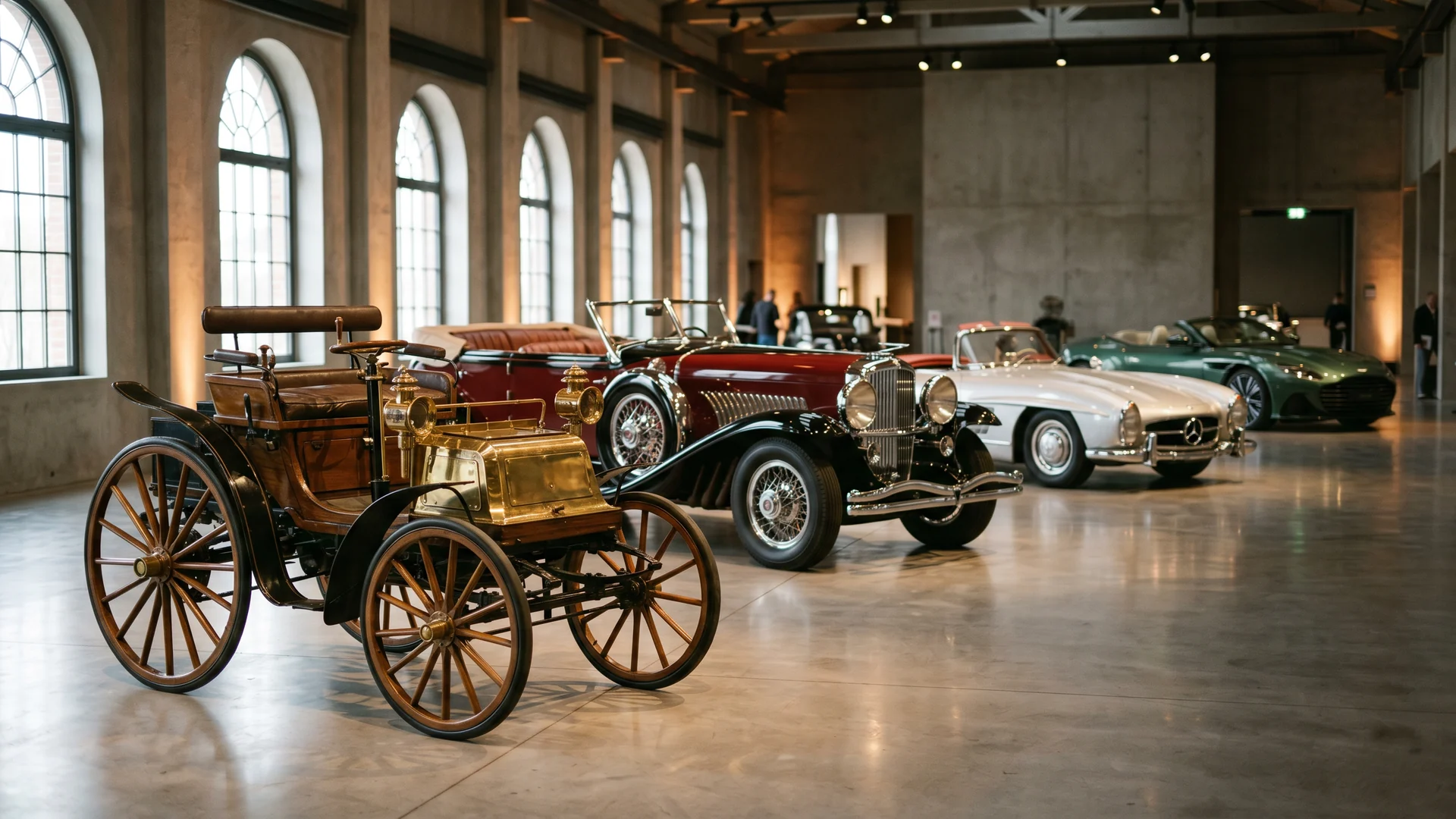
Classic Car History Timeline: From Benz to the Modern Collector Era
Classic car history timeline from the 1886 Benz Patent-Motorwagen through coachbuilding, muscle cars and supercars to modern collectibles. Discover th…