Classic Car Insurance Guide: Protecting Your Vintage Investment
Classic car insurance guide: why agreed-value policies beat stated and actual cash value, how Hagerty, Grundy and Chubb compare, plus costs and coverage tips.…
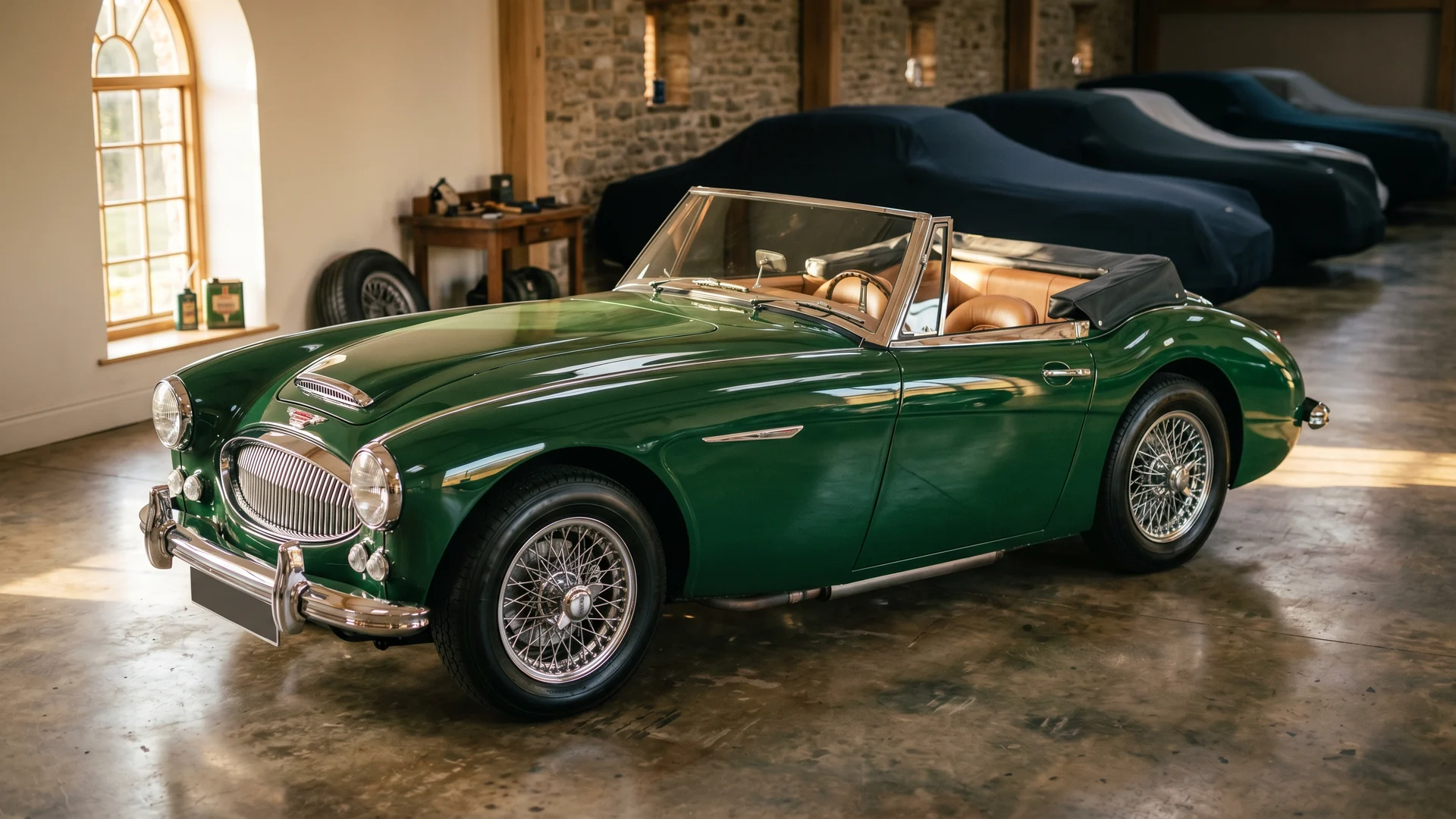
Classic cars need a specialized agreed-value policy that pays the pre-set amount with no depreciation, because standard auto insurance cannot fairly value or replace a unique vintage vehicle.
Key Takeaways
- Agreed Value is the gold standard for classic-car insurance: you and the insurer fix a dollar value upfront, and a total loss pays that exact amount with no depreciation or market negotiation.
- Stated Value is a trap because the fine print limits payout to the lesser of the stated value or the actual cash value at the time of loss, so a stated $150,000 Porsche may pay only $80,000.
- Hagerty, Grundy, American Collectors Insurance, Heacock Classic, and Chubb all offer genuine agreed-value policies that serious collectors use.
- Classic policies are cheap because they assume sparing use: typical mileage limits run 2,500 to 5,000 miles per year, secure locked enclosed-garage storage, and often a separate daily-driver for every licensed driver.
- Cars undergoing restoration need builders' risk or restoration-in-progress coverage, since a project insured at $30,000 can become a $120,000 classic and stay dangerously underinsured until the agreed value is updated.
- An agreed-value policy typically costs $400 to $1,200 a year for a $100,000 car, and a $1 million umbrella policy adds only $200 to $400 annually.
- Always insist on your right to choose a marque-specialist repair shop, and ask explicitly about diminished-value coverage, which compensates for the permanent value loss a documented accident causes.
🌐 Also available in: Deutsch
The Classic Car Insurance Guide: Protecting Your Investment with the Right Policy
Standard automobile insurance is a product designed for a world of predictable depreciation, 12,000 to 15,000 annual miles of commuting and errands, and the assumption that any damaged vehicle can be replaced with a comparable model from a dealer’s inventory or a used-car listing. Classic cars operate in an entirely different financial and practical reality. They appreciate or at least hold their value over time rather than depreciating toward zero. They travel perhaps 1,000 to 3,000 miles annually, often exclusively on fair-weather weekends. And they cannot, in any meaningful sense, be “replaced” by a comparable vehicle because each classic car is, to some degree, unique, a combination of specific history, condition, provenance, and patina that no other car, even one of the same model and year, can duplicate. Insuring a classic car properly requires a specialized policy that recognizes these fundamental differences, and failing to secure the right coverage, a mistake that new owners make with alarming frequency, can result in catastrophic financial loss in the event of a claim. This guide explains the critical distinctions between policy types, compares the major classic-car insurance providers, addresses the unique challenges of insuring restoration projects and collections, and provides the practical knowledge every classic-car owner needs to protect their investment. The stakes could hardly be higher: a single uninsured or underinsured loss can wipe out years of careful acquisition and stewardship, and the difference between the right policy and the wrong one is often the difference between a covered claim paid promptly and a devastating financial blow from which you may never fully recover.
Agreed Value versus Stated Value versus Actual Cash Value: The Most Important Distinction
The most critical distinction in all of classic-car insurance, and the one that separates policies that genuinely protect your investment from those that create an illusion of protection while leaving you exposed, is the valuation method by which your car will be valued in the event of a total loss. Agreed Value is the gold standard and the only structure that is truly appropriate for a classic car. Under an agreed-value policy, you and the insurance company agree, at the time the policy is written and before any claim arises, on the specific dollar value of your vehicle. This agreement is documented in the policy and becomes binding on both parties. In the event of a total loss, a garage fire, a theft, an accident that damages the car beyond economic repair, the insurer pays exactly that agreed amount, with no depreciation deduction, no market-comparison negotiation, and no games with comparable sales data. If your 1965 Porsche 911 is insured for an agreed value of $150,000 and is destroyed by a fire in your garage, you receive a check for $150,000, and that is the end of the matter. Hagerty, Grundy, American Collectors Insurance, Heacock Classic, and Chubb all offer genuine agreed-value policies, and these are the companies that serious collectors use.
Stated Value is a trap that has ensnared countless unsuspecting classic-car owners who believed they were adequately protected. A stated-value policy allows you to declare the value of your vehicle, the “stated value”, but the fine print, typically buried in paragraphs of legalese that few policyholders read carefully, limits the insurer’s liability to the lesser of the stated value or the actual cash value of the vehicle at the time of loss, as determined by the insurer’s adjusters using whatever valuation methodology they choose. The insurer can and often will argue that your stated $150,000 Porsche was actually worth only $80,000 at the time of loss, and $80,000 is what they will pay, regardless of the number on your declarations page. Stated-value policies are almost never appropriate for classic cars, and if your agent proposes one, you should seek coverage elsewhere.
Actual Cash Value, or ACV, is the default valuation method for standard auto policies written for daily-driver vehicles. The insurer determines the market value of the vehicle at the time of loss using third-party valuation services, comparable sales data, and the adjuster’s professional judgment. For a 2018 Toyota Camry, this works adequately because the market for three-year-old Camrys is deep, liquid, and easily documented with thousands of transactions. For a 1957 Mercedes-Benz 300SL Gullwing, the “comparable” market might consist of three cars that sold at auction in the past two years, none of which was identical to yours in specification, condition, or provenance, and the insurer’s valuation is unlikely to match your understanding of the car’s worth or the cost of acquiring a replacement of comparable quality.
Usage Restrictions, Mileage Limits, and Storage Requirements
Classic-car insurance policies are priced on the well-supported actuarial assumption that the insured vehicle is used sparingly, for activities consistent with the collector-car hobby, and stored securely when not in use. These assumptions are what make classic-car insurance dramatically less expensive than standard auto insurance for a vehicle of comparable value. Typical mileage limits are 2,500 to 5,000 miles per year, though higher limits and even unlimited-mileage policies are available from some insurers at an additional premium for owners who drive their classics more extensively. Insurers generally require that the vehicle be stored in a locked, private, fully enclosed garage, not a carport, not a driveway, not the street, when it is not being driven. This requirement reflects the reality that theft, vandalism, and weather-related damage are dramatically more likely for vehicles stored outdoors. Some insurers also require proof that every licensed driver in the household has a separate, modern, daily-use vehicle, the reasoning being that if everyone has a reliable modern car to drive to work and run errands, the classic is genuinely a hobby vehicle and will not be pressed into commuting or regular transportation service.
Be completely honest about your intended usage when binding a classic-car policy. If you tell the insurer the car will be driven only to car shows and on occasional weekend pleasure drives, and you then drive it to work three days a week and file a claim for an accident that occurred in your office parking lot on a Tuesday morning, the insurer is within its rights to deny coverage on the basis of material misrepresentation of the vehicle’s use. The savings from a classic policy are substantial enough that it is almost always worth adjusting your actual driving patterns to comply with the policy’s terms, or purchasing a flexible-usage endorsement that explicitly allows the driving you intend to do.
The Major Providers Compared
Hagerty is the dominant force in the North American classic-car insurance market, insuring over two million vehicles and writing by far the largest volume of classic-car policies in the industry. Hagerty offers true agreed value, no deductibles for collector vehicles, flatbed towing with no mileage limit, and a suite of value-added services including an online valuation tool that draws on their extensive transaction database, a well-produced members’ magazine, and an active events program that spans the country. Hagerty’s Driver’s Club membership, available for $70 per year, provides roadside assistance specifically designed for classic cars, discounts on automotive products and services, and access to Hagerty events. The company’s financial stability, rated A by AM Best, provides confidence in their ability to pay claims even in the event of a widespread natural disaster affecting thousands of policyholders simultaneously. Hagerty’s claims experience is generally well-reviewed by the collector community, and the company has invested heavily in claims adjusters who understand classic cars and the specialized repair processes they require.
Grundy, founded in 1947 and underwritten by Philadelphia Insurance Companies, has specialized in collector-vehicle insurance longer than virtually any other provider in the market. Grundy’s policies feature agreed value, an unusually generous provision of no mileage limits, a significant benefit for owners who drive their classics more extensively than Hagerty’s standard limits permit, higher liability coverage at $500,000, and coverage for spare parts and tools up to $500. Grundy requires that all licensed drivers in the household maintain a separate daily-use vehicle and that the classic be stored in a locked, enclosed garage. The company’s longevity and focus on the collector market have earned it a loyal following, particularly among owners who value the no-mileage-limit feature.
American Collectors Insurance, underwritten by American Bankers Insurance Company of Florida, covers a broad spectrum of collector vehicles including not only stock classics but also hot rods, kit cars, modified vehicles, and military vehicles that fall outside the guidelines of some more traditional insurers. ACI offers agreed value, flexible mileage plans at 2,500, 5,000, and 7,500 miles annually, and an inflation-guard feature that automatically increases the agreed value each year to account for market appreciation. This last feature is particularly valuable for owners who might otherwise forget to update their agreed value and find themselves underinsured when the market has moved significantly upward.
Chubb occupies the very highest end of the collector-car insurance market, catering to clients with significant collections and substantial personal assets. Chubb’s Masterpiece policy covers entire collections, automobiles, fine art, jewelry, wine, and other valuable assets, under a single umbrella, with agreed value, worldwide coverage, no mileage restrictions, and a dedicated claims concierge who manages the entire process. Chubb’s premiums are correspondingly higher, typically ranging from 0.5 to 1.0 percent of the total agreed value annually for collections exceeding $5 million, but the breadth of coverage and the quality of service reflect the premium pricing. For collectors whose time is more valuable than the differential in premium, Chubb is the default choice.
Restoration, Transport, and International Coverage
A car that is undergoing restoration presents a unique insurance challenge that standard classic-car policies do not address. The car is not drivable, its value is in flux as work proceeds and as parts and labor accumulate, and it may be located in a restoration shop rather than the owner’s garage. Standard classic-car policies typically exclude vehicles undergoing restoration, but most specialist insurers offer restoration coverage, often called builders’ risk or restoration-in-progress coverage, that insures the vehicle based on its current value plus the value of accumulated parts and labor, with periodic re-valuation as the project advances through its stages. Notify your insurer the moment you commence a restoration, and update the agreed value in stages as the work progresses and the car’s value increases. A car that was insured for $30,000 as a project and is now, after two years of work, a $120,000 restored classic is dangerously underinsured until the policy reflects its new reality.
Spare parts, tools, and automotive memorabilia can represent significant investments that are not automatically covered by standard classic-car or homeowners’ policies. Grundy and Hagerty offer spare-parts coverage up to specified limits, typically $500 to $2,000 included in the base policy, with higher limits available as an endorsement. For substantial spare-parts inventories or extensive collections of automobilia, original sales literature, period posters, scale models, artwork, a scheduled personal-articles endorsement or a separate collectibles policy provides the comprehensive coverage these items warrant.
Claims, Repairs, and Diminished Value
In the unfortunate event of a claim, your classic-car policy should pay for repairs based on the estimate from the repair shop of your choice, subject to the agreed value of the vehicle. Insist on your right to choose the repair facility, a marque specialist who understands the car and will use correct materials, fasteners, and techniques, not the insurer’s preferred network of collision centers that specialize in late-model unibody repair and may never have touched a car like yours. A Ferrari 308 repaired by a general collision shop may emerge with inconsistent panel gaps, paint that does not match the original in color or texture, and aftermarket fasteners that a concours judge or a knowledgeable prospective buyer will detect instantly, permanently reducing the car’s value. Classic-car policies typically grant the policyholder the explicit right to choose the repair facility. Exercise that right.
Diminished value: the reduction in a car’s market value resulting from an accident and subsequent repair, even when the repair is executed to the highest standard, is a particularly contentious and important issue in the classic-car world. A 1963 Chevrolet Corvette Split-Window Coupe that has a documented accident history on its Carfax or in its ownership file will always sell for less than an otherwise identical car with a clean, damage-free history. Buyers in the collector market are obsessively focused on originality and history, and an accident, even one perfectly repaired, is a permanent mark on the car’s record. Some classic-car policies include diminished-value coverage that compensates the owner for this loss of value; many do not. Ask explicitly about diminished-value coverage when you bind your policy, and if it is available, purchase it. If it is not available from your current insurer, consider whether the risk is acceptable or whether a different insurer can provide more comprehensive protection.
Liability and Umbrella Coverage
Liability coverage protects your personal assets in the event that you cause injury or property damage to others while operating your classic car. Classic-car policies typically provide liability limits of $100,000 per person and $300,000 per accident, or $500,000 combined single limit. For collectors with significant personal assets, a home, investments, savings, these limits may be inadequate in the event of a serious accident. An umbrella liability policy, providing $1 million or more in excess coverage above the limits of the underlying auto and homeowners’ policies, costs only $200 to $400 annually and provides protection that far exceeds its modest cost. Consult your insurance agent or financial advisor about the appropriate level of umbrella coverage given your specific asset profile.
The classic-car insurance market is, in many respects, a genuinely underappreciated and exceptional bargain. A well-structured agreed-value policy from a specialist insurer typically costs $400 to $1,200 annually for a $100,000 car, a fraction of what standard auto insurance would charge for a modern car of comparable value. This bargain exists precisely because classic cars are driven sparingly, maintained to a high standard, garaged securely, and owned by people who care deeply about their preservation. Understand the structure of your policy, verify that the valuation method is genuinely agreed value, maintain accurate and current agreed-value figures that reflect the market as it actually exists rather than as you wish it to be, and your insurance will provide the financial peace of mind that allows you to enjoy your classic car without the nagging anxiety that a loss would be financially catastrophic. Annual policy reviews are a discipline well worth cultivating: as the market moves upward or downward, as your car appreciates or holds steady, and as your collection evolves over time, your coverage must evolve with it. A brief phone call to your agent once a year to review agreed values, confirm coverage terms, and discuss any changes in your usage patterns or storage arrangements is a small investment of time that ensures your protection keeps pace with your car’s actual value and your current life circumstances. The peace of mind that comes from knowing you are properly insured is, like the classic car itself, something truly precious and highly worth preserving with vigilance and care for as long as you own and enjoy these magnificent machines.
Frequently Asked Questions (FAQ)
What is agreed value in classic car insurance and why does it matter?
Agreed value means you and the insurer agree on your car's specific dollar value when the policy is written, documented and binding on both parties. In a total loss the insurer pays that exact amount with no depreciation deduction or market-comparison negotiation. It is the only valuation structure truly appropriate for a unique classic car.
Why is a stated-value policy considered a trap for classic car owners?
A stated-value policy lets you declare a value, but fine print limits the payout to the lesser of that stated value or the actual cash value at the time of loss. The insurer can argue your stated $150,000 Porsche was worth only $80,000 and pay that instead. Stated value is almost never appropriate for classic cars.
Which companies offer genuine agreed-value classic car insurance?
Hagerty, Grundy, American Collectors Insurance, Heacock Classic, and Chubb all offer genuine agreed-value policies, and these are the companies serious collectors use. Hagerty is the dominant North American provider, Grundy specializes in collector vehicles since 1947, and Chubb caters to the highest-end collections.
What are the usage and storage requirements for classic car insurance?
Policies assume sparing use, with typical mileage limits of 2,500 to 5,000 miles per year. Insurers generally require the vehicle be stored in a locked, private, fully enclosed garage, not a carport, driveway, or street. Some also require every licensed driver in the household to have a separate modern daily-use vehicle.
How much does classic car insurance cost compared to standard auto coverage?
A well-structured agreed-value policy from a specialist insurer typically costs $400 to $1,200 annually for a $100,000 car, a fraction of what standard auto insurance charges for a modern car of comparable value. The bargain exists because classic cars are driven sparingly, garaged securely, and carefully maintained by their owners.
How do I insure a classic car during restoration?
Standard classic-car policies typically exclude vehicles undergoing restoration, but most specialist insurers offer builders' risk or restoration-in-progress coverage. It insures the car at current value plus accumulated parts and labor, with periodic re-valuation. Notify your insurer the moment work begins and update the agreed value in stages, since a $30,000 project can become a $120,000 classic.
What is diminished value and does classic car insurance cover it?
Diminished value is the reduction in a car's market value from a documented accident and repair, even when the repair is flawless. A 1963 Corvette Split-Window with an accident history will sell for less than an identical clean-history car. Some policies include diminished-value coverage and many do not, so ask explicitly when you bind your policy.
Do I need umbrella liability coverage for my classic car?
Classic-car policies typically provide liability limits of $100,000 per person and $300,000 per accident, or $500,000 combined single limit, which may be inadequate for collectors with significant assets. An umbrella policy adding $1 million or more in excess coverage costs only $200 to $400 annually and far exceeds its modest cost in protection.
More from Blog
The Future of Classic Car Collecting: Trends Shaping the Next Generation
The future of classic car collecting: why 2035 ICE bans spare existing cars, plus e-fuels, shifting demographics, electromods and fractional ownership…
Classic Car History Timeline: From Benz to the Modern Collector Era
Classic car history timeline from the 1886 Benz Patent-Motorwagen through coachbuilding, muscle cars and supercars to modern collectibles. Discover th…
Famous Classic Car Collections: The World’s Most Extraordinary Automotive Assemblies
Explore the world’s most famous classic car collections, from Ralph Lauren and the Mullin and Petersen museums to the record-setting Schlumpf Co…