Classic Car Auctions Guide: How to Buy and Sell at Major Automotive Auctions
Classic car auctions guide: compare RM Sotheby’s, Bonhams, Mecum and Bring a Trailer, decode buyer’s premiums, inspect cars and bid wisely to buy and sell smart.…
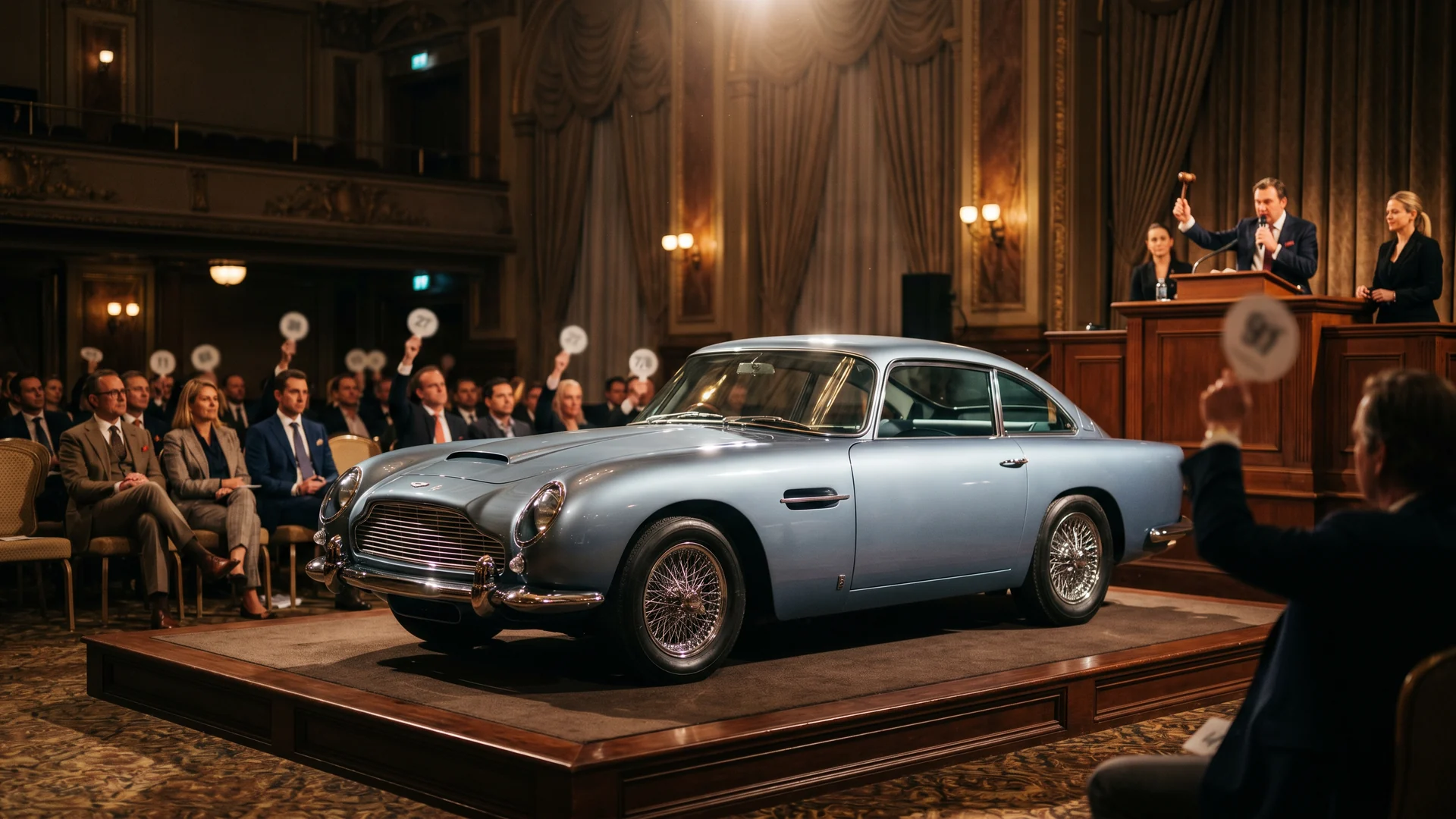
Buying and selling well at classic car auctions means knowing the major houses, factoring in buyer's premiums, inspecting cars in person, and setting a firm maximum bid.
Key Takeaways
- RM Sotheby's holds the public-auction record with the 1962 Ferrari 250 GTO sold for $48.4 million in 2018, and anchors events at Monterey, Paris, and Villa Erba.
- Barrett-Jackson's signature no-reserve policy guarantees a 100 percent sell-through rate; its January Scottsdale event spans nine days, sells over 1,800 vehicles, and draws more than 300,000 attendees.
- Bring a Trailer sells over 50,000 vehicles annually with average prices of $45,000 to $50,000 and charges a capped 5 percent buyer's fee maxing out at $7,500.
- Buyer's premiums vary widely: a $100,000 hammer price costs $112,000 at RM Sotheby's, $115,000 at Bonhams, and $105,000 at Bring a Trailer.
- The cardinal rule of auction buying is to inspect the car yourself or hire a marque specialist, since cars sell strictly as-is, where-is with no warranty.
- Set a firm all-in maximum bid including the buyer's premium, because the auction environment is engineered to push buyers past their predetermined limit.
- Choosing the right venue matters: a Ferrari 250 GT Lusso peaks at Monterey in August, while a 1968 Hemi Dart performs best at Mecum Kissimmee in January.
🌐 Also available in: Deutsch
The Classic Car Auction Guide: How to Buy and Sell at the World’s Greatest Automotive Sales
The classic car auction is theater, sport, and commerce rolled into one adrenaline-charged event. The auctioneer’s rhythmic chant accelerating toward a climax, the paddles rising and falling around the room, the pregnant pause as a bid hangs in the air, the decisive crack of the hammer meeting the block, these are the moments that define the collector-car hobby at its most dramatic and most consequential. Each year, tens of thousands of collector vehicles cross auction blocks around the world, generating billions of dollars in transaction volume and establishing the market values that ripple through every other sales channel. Whether you are a first-time bidder hoping to drive home a slice of automotive history or a seasoned collector pruning your stable or testing the market’s appetite for a carefully curated consignment, understanding the auction ecosystem, its major players, its rules and conventions, its hidden costs, and its strategic nuances, is essential to navigating it successfully and avoiding the expensive mistakes that inexperienced participants make with alarming regularity.
The Major Auction Houses and Their Distinctive Niches
RM Sotheby’s dominates the upper echelon of the collector-car auction market with a combination of scholarship, presentation, and access to the world’s most significant automobiles that no competitor has been able to match consistently. Born from the Canadian restoration shop RM Auto Restorations in 1991 and now operating in partnership with the Sotheby’s auction house, the 280-year-old institution whose name is synonymous with fine art, jewelry, and collectibles of the highest order, RM Sotheby’s holds the record for the most expensive car ever sold at public auction, the 1962 Ferrari 250 GTO at $48.4 million in 2018, and has facilitated private sales exceeding $100 million that, while not publicly confirmed in detail, are well understood within the upper reaches of the market. Their flagship events anchor the collector-car calendar: Monterey in August during Car Week, Paris in February during the Rétromobile exhibition, Villa Erba on the shores of Lake Como in May, and an expanding presence in the Middle East that reflects the region’s growing importance as a source of collector capital. RM Sotheby’s catalogues are widely regarded as the gold standard in automotive scholarship, with exhaustive provenance research, some of the finest photography in the industry, and an editorial tone that treats each consignment as an important historical artifact worthy of serious study.
Gooding and Company, founded by David Gooding in 2003 after his departure from RM where he had been a key figure in building the auction house’s reputation, has carved out a distinctive position at the highest level of the market with carefully curated, blue-chip offerings at Pebble Beach, Amelia Island, and Scottsdale. Gooding’s 2022 sale of a 1955 Ferrari 410 Sport Spider for $22.5 million at Pebble Beach, the very car driven by Carroll Shelby during his brief but brilliant driving career and later campaigned by Juan Manuel Fangio, demonstrated the house’s continued ability to access historically significant cars with exceptional provenance. Gooding catalogues are beautifully produced objects in their own right, and the company’s pre-sale estimates are generally regarded by market observers as more realistic and less aspirational than those of some competitors.
Bonhams, the London-based auction house founded in 1793, brings a palpable sense of Old World gravitas to the collector-car space that distinguishes it from its North American-focused competitors. Known for its annual sales at the Goodwood Festival of Speed, Les Grandes Marques à Paris, and the historic Bond Street headquarters in London’s Mayfair district, Bonhams is particularly strong in vintage motorcycles, pre-war cars, and European marques with deep British followings, Jaguar, Aston Martin, Bentley, and Rolls-Royce are core strengths. Their Quail Lodge sale during Monterey Car Week has become a fixture on the calendar for discerning collectors who appreciate the house’s traditional approach.
Mecum Auctions is the undisputed volume leader in the United States, selling over 30,000 lots annually across events in Kissimmee, Florida; Indianapolis, Indiana; Las Vegas, Nevada; Harrisburg, Pennsylvania; and several other venues that collectively form a relentless year-round auction calendar. Mecum’s extensive televised coverage on MotorTrend and NBCSN has brought the auction experience to a massive mainstream audience, and the house is dominant in American muscle cars, Corvettes of every generation, hot rods, street rods, and the broad middle of the American collector-car market where six-figure transactions are the norm and volume matters as much as individual headline results. Dana Mecum’s distinctive auctioneer style, the “Mecum Muscle” brand identity, and the sheer scale of the company’s operations make it the default destination for muscle-car buyers and sellers who want maximum exposure to the American enthusiast audience.
Barrett-Jackson, founded in 1971 by Tom Barrett and Russ Jackson and now headquartered in Scottsdale, Arizona, is the most televised auction in the world and arguably the most famous among the general public. Barrett-Jackson’s signature no-reserve policy, every single car that crosses the block sells regardless of price, with no minimum threshold below which the consignor can withdraw the car, creates an electric atmosphere in the auction hall and guarantees a perfect 100 percent sell-through rate that no other major auction house can match. The flagship Scottsdale event each January spans nine days, sells over 1,800 vehicles, and draws more than 300,000 attendees to WestWorld, the sprawling equestrian and event facility that has become synonymous with the auction. Barrett-Jackson is particularly strong in American muscle, restomods, custom builds, and the charity cars that routinely command premium prices as bidders compete to support worthy causes in a public forum.
Broad Arrow Group, founded in 2021 by a team of veteran auction specialists including several former RM Sotheby’s executives and backed by Hagerty, represents the newest entrant at the upper end of the market and has quickly established itself as a credible alternative to the established houses, particularly among the modern-classic segment of 1980s through 2000s cars that appeal to younger collectors.
The Digital Disruption: Online Auctions Transform the Market
Bring a Trailer, acquired by Hearst Autos in 2020, has fundamentally disrupted the classic-car auction space in ways that continue to ripple through the industry. BaT now sells over 50,000 vehicles annually across every conceivable category, with average sale prices hovering in the $45,000 to $50,000 range and total annual sales volume comfortably exceeding $1.5 billion, figures that place the platform among the largest automotive marketplaces in the world by any measure. The platform’s unique and defining differentiator is its comment section: a live, real-time discussion thread attached to every auction where knowledgeable community members, marque specialists, professional restorers, former owners of similar cars, and eagle-eyed enthusiasts, scrutinize every photograph, every claim in the listing description, every detail visible or suspiciously absent, and every question posed by potential bidders. Inconsistent panel gaps, non-original hose clamps, replacement fasteners, overspray on weatherstripping, VIN plates that look too new, and a thousand other tell-tale signs of misrepresentation are spotted and discussed within hours of a listing going live. A BaT auction runs for seven days, and a unique anti-sniping mechanism adds two minutes to the clock after any bid placed in the final moments, ensuring that the auction ends only when all interested parties have had a genuine opportunity to respond. In March of 2024, BaT sold a 1956 Mercedes-Benz 300SL Gullwing for $2.1 million, demonstrating definitively that serious seven-figure cars now trade on a platform once dismissed as a venue for oddball enthusiast vehicles.
Cars and Bids, founded by the automotive YouTuber and journalist Doug DeMuro, focuses specifically on enthusiast cars from the 1980s through the 2010s, the modern enthusiast segment encompassing Japanese sports cars, German performance sedans, and quirky limited-edition models that the established auction houses often overlook or undervalue. PCarMarket specializes exclusively in Porsche, providing a focused platform for the most collected marque in the world. Collecting Cars, founded in the United Kingdom by the automotive media personality Chris Harris and his partners, has built a strong and growing following in the UK and European markets with a curated, enthusiast-focused approach that emphasizes driving-quality cars over investment-grade concours queens.
Understanding Buyer’s Premiums: The True Cost of Winning
The buyer’s premium: the fee that the auction house adds to the hammer price and that you, as the winning bidder, must pay on top of your bid, materially alters your true cost and must be factored into every bidding decision. As of the 2026 auction season, RM Sotheby’s charges a buyer’s premium of 12 percent on the hammer price up to $250,000 and 10 percent on any amount above that threshold. Gooding and Company charges a flat 12 percent on the full hammer price for in-person bidders and 10 percent for online bidders participating remotely. Bonhams charges 15 percent on the first $250,000 and 12 percent on amounts above. Bring a Trailer charges a capped buyer’s fee of 5 percent with a maximum of $7,500, a structure that is dramatically more favorable to buyers in the six-figure price range. The practical impact of these premiums is substantial: a $100,000 hammer price at RM Sotheby’s costs you $112,000 out the door; at Bonhams, $115,000; at Bring a Trailer, $105,000. Over a $500,000 purchase, these differences amount to tens of thousands of dollars that will never be reflected in the car’s value but are very real costs of acquisition. Sellers, for their part, typically pay a consignment fee ranging from zero percent for the most desirable cars where auction houses compete aggressively for the consignment to as much as 10 percent for less exceptional vehicles, plus any additional charges for catalog photography, featured-listing placement, and transaction processing.
Pre-Auction Due Diligence: The Work That Precedes the Bid
The cardinal rule of auction buying is simple, absolute, and too frequently ignored by inexperienced bidders carried away by the excitement of the moment: inspect the car yourself, or hire a marque specialist to inspect it on your behalf. Auction preview days, typically held on the two or three days preceding the sale, provide open access to every car in the auction. Bring a flashlight powerful enough to illuminate dark corners of engine bays and undercarriages. Bring a paint meter and know how to use it. Bring a notebook and write down your observations while they are fresh. Check panel gaps for consistency, a door that fits differently on one side than the other tells a story the glossy paint is trying to hide. Examine the fit of doors, hoods, and deck lids. Assess the consistency of paint across all panels, looking for variations in color, texture, and orange peel that indicate partial resprays. Examine rubber seals and weatherstripping for overspray, a tell-tale sign of a respray performed without removing these components. For pre-war cars, bring a small magnet wrapped in a soft cloth to prevent scratching and test for the presence of body filler, which a magnet will not adhere to. Review every page of the condition report available from the auction house, typically published online in the weeks before the sale, and request any additional documentation the house may hold but has not published. Understand that auction houses sell cars strictly “as-is, where-is,” with no warranty expressed or implied, and that the few minutes you spend examining a car on the preview lawn represent your only opportunity to assess the machine before committing tens or hundreds of thousands of dollars to its purchase.
Bidding Strategy for the Disciplined Buyer
Set a firm maximum bid, your all-in number including the buyer’s premium, and write it down on a piece of paper that you carry into the auction hall. The auction environment is carefully engineered to stimulate competitive bidding: the rapid pace, the auctioneer’s hypnotic rhythm, the social pressure of a room full of people watching, the psychological momentum as the numbers climb toward a threshold you told yourself you would not cross. Many an experienced collector has paid 20 percent above their predetermined limit in the heat of the moment, and every single one of them regretted it afterward. Position yourself in the room where you can see both the auctioneer and the car as it sits on the block, if the venue’s layout permits. Bidding increments follow a set pattern that accelerates with price: typically $500 increments up to $5,000, $1,000 increments to $10,000, $5,000 increments to $50,000, $10,000 increments to $100,000, and increasing from there. Late bidding, entering the fray after the car appears to have stalled and the auctioneer is calling for final bids, can be an effective tactic that unsettles competitors who believed the car was theirs, but be aware that experienced auctioneers may call “fair warning” and drop the hammer without waiting for hesitant bidders who have not made their intentions clear.
Selling at Auction: Maximizing Your Result
Consigning a car to the right auction, at the right time, and presented in the right way makes a meaningful difference in the result you achieve. For a Ferrari 250 GT Lusso, Monterey Car Week in August, when wealthy collectors from every continent gather on the Monterey Peninsula and the media attention on the collector-car world reaches its annual peak, is demonstrably the optimum venue. For a factory lightweight 1968 Hemi Dart, Mecum Kissimmee in January draws the hardcore muscle-car crowd in concentrated force, and the result will almost certainly exceed what the same car would bring at a venue where muscle cars are a sidebar rather than the main event. Provide the auction house with every piece of documentation you possess, organized and complete: service records spanning the car’s entire life, ownership history with named previous owners wherever possible, restoration invoices that detail exactly what was done and by whom, period photographs showing the car in its earlier life, factory build sheets and window stickers if they survive, and any correspondence, concours judging sheets, or magazine features that add to the car’s documented narrative. Work with the auction specialist assigned to your consignment to set a realistic reserve that balances the desire for a strong result against the real risk that an overly ambitious reserve will result in a no-sale, a car that fails to meet its reserve and goes home with its owner, acquiring the stigma of having been rejected by the market, which makes it harder to sell at any subsequent venue.
After the Hammer Falls: Logistics and Obligations
When the hammer falls and the auctioneer points to your paddle number, you are legally bound to complete the purchase. The moment is final. Payment is typically due within 24 to 72 hours for live auctions, though specific terms vary by auction house and should be confirmed before you bid. Online auctions generally require payment within three to seven days. Arrange transport with a reputable enclosed carrier, Reliable Carriers, Intercity Lines, Plycar, and Horseless Carriage all maintain relationships with the major auction houses and often have truck capacity dedicated specifically to post-auction transport from major events. Insure the car before it begins its journey. The auction house’s title department will handle the transfer of ownership, and you will receive a bill of sale and, depending on the jurisdiction, the necessary paperwork for registration. Sales tax obligations vary by state and by the specifics of the transaction; consult an accountant or tax professional who understands collector-car transactions before you assume exemption. The auction experience, approached with preparation, discipline, and respect for both the machinery and the marketplace, rewards the diligent and punishes the impulsive. Buy and sell wisely, and the auction hall becomes not a casino but a marketplace where informed participants transact on fair terms.
Frequently Asked Questions (FAQ)
Which auction house holds the record for the most expensive classic car ever sold at public auction?
RM Sotheby's holds the record, selling a 1962 Ferrari 250 GTO for $48.4 million in 2018. Born from the Canadian restoration shop RM Auto Restorations in 1991 and now partnered with the 280-year-old Sotheby's, RM dominates the upper echelon with flagship events at Monterey, Paris, and Villa Erba.
What is Barrett-Jackson's no-reserve policy and how does it work?
Barrett-Jackson's no-reserve policy means every car that crosses the block sells regardless of price, with no minimum threshold below which the consignor can withdraw it. This guarantees a 100 percent sell-through rate that no other major house can match and creates an electric atmosphere. The flagship Scottsdale event each January sells over 1,800 vehicles.
How much is the buyer's premium at major classic car auctions like RM Sotheby's and Bonhams?
As of the 2026 season, RM Sotheby's charges 12 percent up to $250,000 and 10 percent above. Bonhams charges 15 percent on the first $250,000 and 12 percent above. Bring a Trailer caps its buyer's fee at 5 percent with a $7,500 maximum, making it far more favorable for six-figure buyers.
What makes Bring a Trailer different from traditional classic car auctions?
Bring a Trailer's defining differentiator is its live comment section, where marque specialists, restorers, and enthusiasts scrutinize every photo and claim, spotting signs of misrepresentation within hours. Each auction runs seven days with an anti-sniping mechanism that adds two minutes after late bids. It sells over 50,000 vehicles annually.
How should I inspect a classic car at an auction preview before bidding?
Inspect the car yourself or hire a marque specialist during preview days, typically held two or three days before the sale. Bring a powerful flashlight, a paint meter, and a notebook. Check panel gaps, paint consistency, and weatherstripping for overspray. For pre-war cars, use a cloth-wrapped magnet to detect body filler. Cars sell strictly as-is, where-is.
What bidding strategy helps disciplined buyers avoid overpaying at a car auction?
Set a firm maximum bid, your all-in number including the buyer's premium, and write it on paper to carry into the hall. The environment is engineered to stimulate competitive bidding, and many collectors have paid 20 percent above their limit and regretted it. Bidding increments accelerate with price, starting at $500 increments up to $5,000.
When and where is the best time to sell a classic car at auction?
Venue and timing depend on the car. A Ferrari 250 GT Lusso performs best at Monterey Car Week in August, when wealthy collectors gather and media attention peaks. A 1968 Hemi Dart draws the hardcore muscle-car crowd at Mecum Kissimmee in January. Provide complete documentation and set a realistic reserve to avoid a stigmatizing no-sale.
What happens after the hammer falls when you win a car at auction?
When the hammer falls, you are legally bound to complete the purchase and the moment is final. Payment is typically due within 24 to 72 hours for live auctions and three to seven days online. Arrange transport with a reputable enclosed carrier such as Reliable Carriers or Intercity Lines, insure the car first, and consult a tax professional on sales tax.
Which auction house holds the record for the most expensive car sold publicly?
How much do buyer's premiums add to the final price?
What is the most important rule before bidding on a classic car?
More from Blog
The Future of Classic Car Collecting: Trends Shaping the Next Generation
The future of classic car collecting: why 2035 ICE bans spare existing cars, plus e-fuels, shifting demographics, electromods and fractional ownership…
Classic Car Insurance Guide: Protecting Your Vintage Investment
Classic car insurance guide: why agreed-value policies beat stated and actual cash value, how Hagerty, Grundy and Chubb compare, plus costs and covera…
Classic Car History Timeline: From Benz to the Modern Collector Era
Classic car history timeline from the 1886 Benz Patent-Motorwagen through coachbuilding, muscle cars and supercars to modern collectibles. Discover th…